
Legal in the Lead when improving Contract Templates
Legal should be in the lead when creating contract Templates, but always with the help of all other teams.

NDAs Explained – What You Need to Know (part 1)
NDAs ensure that confidential information is used solely for the specified purpose set out between the parties in a business relationship. In the world of business, where ideas, innovations, financial information and secrets are the keys to success, Non-Disclosure Agreements (NDAs) often play an important role in protecting a company’s confidential information. This article will provide a comprehensive overview of NDAs in the context of Business to Business (B2B) dealings.
What is an NDA?
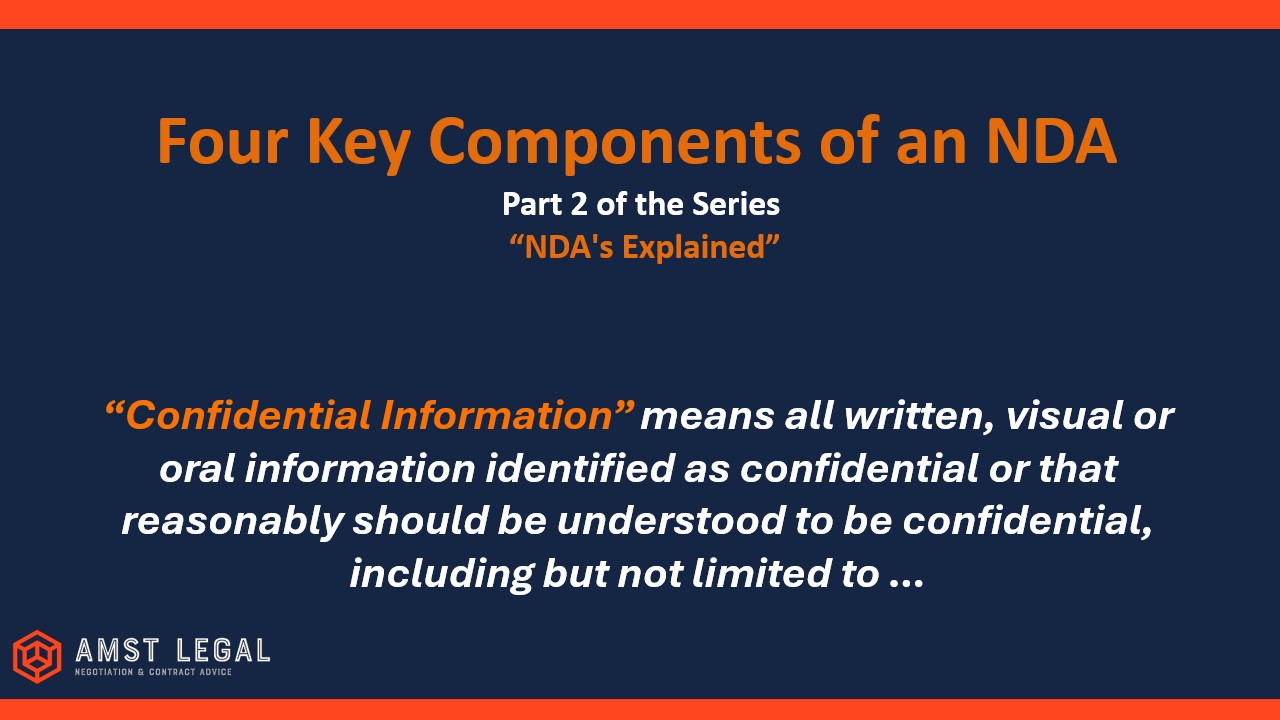
An NDA, also referred to as a Confidentiality Agreement, is a legally binding contract between two or more parties to protect confidential information which may be shared during the course of their business relationship. More specifically, confidential information is non-public information of a company that could harm the company when it would be shared in public. Usually a list of the confidential information is included in the NDA, containing for example: trade secrets, know-how, products and technology-related information, discounts, customer lists, sales and financial information, business plans, etc.
Why and when do we need an NDA?
In the B2B context, NDAs can be an essential tool for protecting proprietary knowledge, trade secrets and other confidential data that is important for a company to maintain its competitive advantages. That sensitive information, therefore, should be defined clearly and carefully in NDAs. However, be careful not to define it too narrow to ensure that you have not missed an important category. By using a properly drafted NDA, your company can secure valuable information from competitors or other third parties who may benefit from the disclosure of such information.
Primary objective
The primary objective of an NDA is to ensure the disclosed sensitive information is securely used and handled, preventing its use or disclosure without proper permission and authorization by the disclosing party. An NDA is often signed at the beginning of a business relationship or before entering into a business relationship.
Example
Common example: a technology company is planning to sell and offer specialized software solutions to an enterprise customer. The companies start by discussing how to integrate the software into the customer’s systems to ascertain the price for the integration and the use of the software. For this, the technology company might share insights about their pricing, SLA, policies and software, and the customer, in turn, might explain their challenges and share business plans. While doing so, the companies therefore plan to share documents including non-public, hence confidential information. This is why it is advised that these companies sign an NDA before sharing this confidential information to each other. Such an NDA can be terminated when the parties sign a final customer contract, which should also include confidentiality terms.
How does an NDA protect your confidential information?’
Like any other legal contracts, an NDA carries important legal consequences for breach of contract. Depending on the severity of a breach, its consequence can range from lawsuits, financial penalties to – in extreme cases – criminal charges. Breaching an NDA can also harm a party’s reputation, which may lead to other long-lasting consequences to its business, especially in business relationships and industries where trust and confidentiality are crucial.
Claims and lawsuits relating to a breach of an NDA are not common, but it absolutely happens that a company needs to pay out a penalty for breach of confidentiality. We have even advised on this matter a few times in the past.
What type of NDA do you need?
There are various types of NDA that can be used based on the specific circumstances and the needs of the parties involved. Below are the three common types of NDA:
- Unilateral NDA (One-sided NDA): In a unilateral NDA, one party, typically the seller, imposes on the other party the obligation to secure the information and not to disclose or use the information for any purpose other than what is specified in the agreement. In a B2B context, unilateral NDAs are often used between buyers and sellers. For instance, a Biotech company (seller), may employ a unilateral NDA to prevent the buyer from disclosing sensitive information they have gained during the purchase of products or services, such as intellectual property and computer technology. Also common in Public Tenders and for RFI (Request for information) in RFP (Request for Price) situations.
- Mutual NDA (Two-sided or Mutual NDA): A mutual NDA involves two parties, and both parties will be sharing sensitive information with each other and agree that both sides will be bound by confidentiality obligations. Mutual NDAs are frequently used when the parties need to exchange considerable amounts of confidential information during their negotiations or business relationship. Such situations can be Joint Ventures, Vendor Contracts or Mergers and Acquisitions.
- Multilateral NDA (Three or More Parties NDA): A multilateral NDA includes three or more parties, where at least one party shares sensitive information with other parties and enforces confidentiality obligations. This type of NDA streamlines the paperwork and administration for the parties in a sense that the parties do not need to enter several unilateral or bilateral NDAs with one another. In a business relationship involving three parties, where all anticipate disclosing confidential information, a single multilateral NDA can replace the need for three different bilateral NDAs between each pair of parties. Such situations can be Partnerships, Government Contracts (like defense and aerospace contracts) and Consortium Agreements.

Canadian Court Recognizes👍as a Contract Agreement
As far as we are aware, a Canadian Court has made a first of its kind ruling relating to the acceptance of an emoji as a contract agreement. This is an interesting judgment to illustrate the developments relating to the acceptance of digital ways to approve contracts. It is a great simple ruling explaining how accepting offers digitally can be seen as a valid contract.
What was the court ruling about?
Parties were involved in court because one party (the seller) claimed that the other party (the Buyer) said yes to an agreement. The Buyer did not say ” yes” or ” I agree” and did not sign any contract, but did send a 👍 Emoji to the Seller. The question in court was whether the sending of this emoji can be treated as an agreement. Is this a valid contract?
Even though no contract was signed, the question was if the emoji could be seen as a ” signature” or a ” yes” to the proposed contract. A very unusual request, but on the other hand also a very normal question as the Seller did act on the Emoji as understood it as being a ” Yes”.
In contract negotiations, please agree on the ways the contract will be signed to avoid these issues.
What was the verdict?
The Canadian Court Ruled that a 👍 Emoji Counts as a Contract Agreement. For details, please see https://lnkd.in/gyBrSAdn
The judge stated, amongst others, the following: “This court readily acknowledges that a 👍 emoji is a non-traditional means to ‘sign’ a document but nevertheless under these circumstances this was a valid way to convey the two purposes of a ‘signature’,” he wrote.
Correct decision?
What seems like an unusual verdict, actually makes a lot of sense looking at the facts in this specific case. After talking to each other on the phone, Kent (the Buyer) sends a copy of a contract as an offer to deliver the goods to him via text to Chris. Chris responds with a thumbs up.
Without knowing the full background, this indeed looks like an agreement to enter into a contract (and agreeing to the contents of the contract). At least under Dutch law, depending on the circumstances of the case, this could reasonably be seen as entering into an agreement.
Trend for the future
This is in line with other verdicts in the past years. Valid contracts are formed all the time in digital form. It can be seen as a binding contract if an offer and acceptance are sent in digital form by e-mail, SMS, WhatsApp and other tech solutions like DocuSign etc. It is an important realization for everyone that the digital world is evolving and we need to adapt!
Lesson Learned
Next time you respond with (for example) 🚀 ✅ ✔️👍🏾🙏🏼 to a question or request to agree to an offer, be very mindful of your intentions.