Comprehensive NDA Guide for Companies: Why are NDAs important?
Should you really sign that NDA before you start negotiating or working together? Short answer: Yes, but don’t make it too complicated. They key is to protect your business with NDAs, while not overcomplicating the process. Due to increased digitalization and data flows, information is value. Therefore, keeping what is confidential should be a priority. This is why we have Non-Disclosure Agreements (NDAs).
We often get asked why and when NDAs should be signed in business negotiations. This is particularly important when sensitive commercial or technical information may be disclosed during early discussions.
This article, together with our previous articles on NDAs (see below a list) aims to help companies understand why and how to effectively leverage Confidentiality Agreements. In this article “Comprehensive NDA Guide for Companies: Why are NDAs important?” we focus on explaining the need of NDAs & practical ways to deal with them.
TLDR – If you only have a minute to read
- NDAs help companies protect sensitive information during business negotiations and partnerships.
- Many types of commercially valuable information are not automatically protected by law, which makes contractual confidentiality essential.
- NDAs clarify how confidential information may be used, shared, and protected between parties.
- In SaaS, procurement, sales, investment discussions and joint development projects, NDAs help manage business confidentiality risk.
- Understanding when to use an NDA in business negotiations helps companies avoid disputes and protect competitive advantage.
Terms Used in This Article
Let’s first start with: what is an NDA and what are the most used definitions when speaking about NDAs?
Non-Disclosure Agreement (NDA)
A legally binding contract that requires one or more parties to keep certain information confidential and limits how that information can be used or shared.
Confidential Information
Information that is not publicly available and that provides commercial value because it remains secret. Examples include pricing models, customer data, product plans, or internal financial information.
Trade Secret
A specific category of confidential information that derives economic value from being secret and is protected under trade secret law if appropriate safeguards are maintained.
Receiving Party
The party that receives confidential information under an NDA and is obligated to protect and restrict the use of that information.
Disclosing Party
The party that shares confidential information with another party under the terms of an NDA.
Statutory Protection
Legal protection provided automatically by law, such as trade secret law or data protection regulations.
Contractual Confidentiality Obligation
A duty created by contract that requires a party to protect and limit the use of confidential information.
Due Diligence
A process where companies review financial, legal, or operational information before completing a transaction such as an acquisition or partnership.
Why are NDAs Necessary?
On of our clients was asking this today & I’m glad she did. It’s a great question, and I felt it was worth putting the answer here as a reminder.
Sensitive information often changes hands long before an agreement, like a Software Contract, is signed in B2B situations..
8 Reasons You Need to Sign NDAs
Well-drafted NDAs help you:
- 🔹 Protect confidential pricing, discounts and commercial proposals
- 🔹 Keep the customer’s budgets, internal processes and business plans confidential
- 🔹 Protect the supplier’s unpublished product roadmap and technical information
- 🔹 Set boundaries before sharing sensitive security reports or vulnerabilities
- 🔹 Limit how information may be used: to evaluate the proposed deal
- 🔹 Clarify who may receive it, including colleagues, advisers and subcontractors
- 🔹 Keep confidentiality obligations in place if the deal falls through
- 🔹 Protect both sides sharing sensitive information
Note that you might not need a Confidentiality Agreement if the confidentiality has already been covered by suitable confidentiality terms in an existing NDA or other Agreement. Check before sharing your NDA!
Remember the Following in Practice
Easy to forget, but keep the NDA-process simple where possible – at least for 80% of all NDAs signed Legal should not be involved.
Golden tips:
- Almost always use mutual NDAs to avoid discussions and delays (there are exceptions).
- Involve Legal as little possible.
- There are many options to handle 80-90% of all NDAs without Legal. They only need to make the Template, Train, link it to great Tech/AI and support with Negotiations only where necessary. This is our TTTN Framework for all contracts, but for NDAs and Amendment Agreements it is the easiest to implement.
- Use your own format as much as possible.
Why are NDAs important?
Knowledge era and data market
We currently live in the knowledge era. That means that information, or data which is another common way to refer to it, is one of the most important trade items today. Information is shared left and right through various means, commonly through SaaS solutions like Gmail, Outlook, OneDrive, Sharepoint, websites and AI etc.
This is very convenient and part of mostly everyone’s daily life today. At the same time, companies with a lot of data can gain a competitive advantage as it can offer benefits for various business actions like marketing and sales. Data is a highly valuable resource in other words. Because of this it may not be a surprise that selling data can generate high revenue, and that the value of the data market follows a steady growth rate. Think about:
- Presenting inventions or business ideas to a potential partner, investor or distributor,
- Sharing details about your company’s finances or marketing with a prospective buyer of your company,
- Receiving services from a company or individual who may have access to some sensitive information when providing those services, or
- Employees gain access to confidential and proprietary information about your company during the course of doing their job.
(see Forbes article “The Key Elements of Non-Disclosure Agreements on Forbes” here).
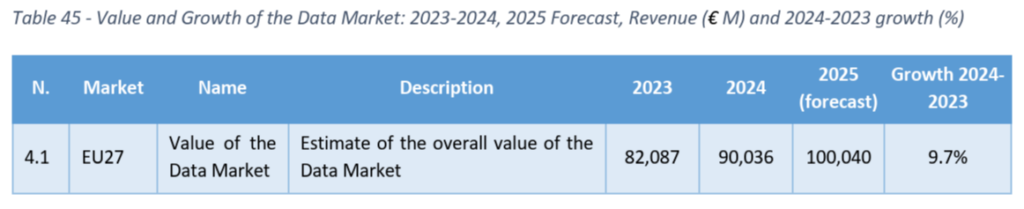
For an illustration, see the chart above from the European Data Market Study 2024-2026 showing that the data market is growing further every year.
However, there are many situations where companies cannot, do not want to or are legally constrained from sharing specific information.
Maintaining a Competitive Advantage
Disclosing certain information, even if it is not strictly confidential in the legal sense, can reveal information that holds great value for your company. That can be for example pricing strategies, cost structures, supplier relationships, sourcing models, product development or acquisition targets. In many cases, the law does not require but does not either forbid disclosure.
In legal practice, confidential information generally refers to information that is not publicly known and that provides commercial value because it remains secret.
Protecting Confidential Information of All Parties
Sensitive information that shall not be shared is not always limited to your own company’s information. Companies are oftentimes also responsible of maintaining other parties’ confidential information secret. Which kind of confidential information that refers to can be vastly different. However, common information this can refer to are for example:
- licensed software or technology,
- co-developed products,
- joint ventures,
- supplier innovations, or client-owned materials.
Information or knowledge like this may be protected either by law or by contracts. If you are required to not disclose the information it is likely due to a contract, commonly an NDA. The important thing to know is that exploiting others’ confidential information may lead to different unwanted consequences.
Compliance with Applicable Laws
Complying with applicable laws can be one of the most strict drivers behind non-disclosure. Companies operating in the EU today are subject to overlapping legal regimes that can differ drastically across jurisdictions and industries.
Within the EU, it can concern regulations like GDPR with the purpose of protecting individuals’ personal data for example. If your customers are consumers, it also unleash several consumer specific regulation and directives. On top of this, local national legislation also becomes relevant of course. Generally, secrecy obligations can be triggered by everything from employment laws, trade secret laws, unfair competition regulations, sector-specific regulations, professional secrecy obligations or public procurement confidentiality rules.
Compliance with Non-legal Sector-Specific Duties
In certain sectors or industries, certain specific non-legal duties play a crucial role in why companies cannot always share certain information too. This mainly revolves around either companies operating in for example finance and banking or healthcare or specific personnel bound by confidentiality duties like accountants, teachers or doctors. Disclosing sensitive information, even if technically lawful in certain cases, can cause harm, undermine trust, or violate professional standards in areas such as financial markets, healthcare, and children’s education. Ethical information governance helps companies prevent misuse, protect vulnerable stakeholders, and maintain long-term credibility, which is increasingly important for regulators, investors, and consumers alike.
Keeping Contractual Promises
This is one of the most common and most underestimated reasons for non-disclosure. Modern business relationships are, and should be, governed by various contractual obligations in different forms between different parties. Oftentimes various regulation and laws may not be applicable either due to contractual choices between the parties. This makes the underlying contract the most important regulation. Despite the case-by.case factor that is highly relevant for each contractual relationship, contractual promises are legally enforceable and can be found in very different forms. Normally, contractual promises are embodied and found in NDAs, However, it can also be found in separate clauses of specific contracts. This includes for example Data Processing Agreements, Master Service Agreements, Service-Level-Agreements or License Agreements. In other words, promises to keep information secret are not limited to NDAs. However, the confidentiality promise is the same and the contract sets out the obligations and rights for each party.
How NDAs can help and what NDAs can achieve
The relevance of a contractual protection mechanism

NDAs play a vital role in protecting sensitive business information in today’s digital, data-driven economy. Companies share large volumes of information in negotiations, partnerships, and daily operations, and without a clear contractual framework, that information can be misused or disclosed unintentionally. While technical safeguards like password protection and secure logins help reduce breach risks, they don’t replace contractual protection or address the legal consequences of misuse.
In practice, NDAs provide contractual protection of sensitive information, particularly in negotiations, due diligence processes, technology partnerships, sales contracts and procurement discussions.
So, how can a simple contract help then? Well, in broad terms, an NDA is a contract that specifies confidential information, what can be done with it and what happens in case that information is disclosed. Essentially, it acts as a safeguard of the specific information it aims to protect. By clearly setting these boundaries, NDAs reduce ambiguity and prevent misunderstandings. This clarity becomes increasingly important as information is shared through digital tools, cloud services, AI and cross border cooperation.
Sometimes, in the heat of transactions between companies, there is always a wish to close deals quick though. This is common and understandable, but may also lead to poor protection of sensitive information. Because, as intricate as every legal system is, it is important to know that it is not always enough to argue that the other party promised to keep your confidential information safe, and there is no generally applicable law safeguarding confidential information shared between companies apart from some specific exceptions that are not always applicable. If the good protection mechanisms of an NDA is used correctly though, it makes up a great tool that shouldn’t be underestimated. A well drafted NDA acts as a preventive safeguard rather than a reactive remedy and have several benefits to it.
Enforceability and Risk Management
NDAs create legally binding obligations that allocate risk between the parties from the outset. They normally specify the consequences of unauthorized disclosure or misuse and may provide contractual remedies. This predictability strengthens legal certainty and reduces the likelihood of disputes. From a risk management perspective, NDAs transform confidentiality from an informal expectation into an enforceable commitment. This is particularly valuable in international business relationships where legal protections differ between jurisdictions and statutory confidentiality rules may be limited or inconsistent.
Operational Clarity in Practice
In daily operations, NDAs translates confidentiality obligations into clear and actionable rules for employees, consultants, and external partners. An effective NDA clarifies who may access confidential information, how it may be shared internally, and what security measures apply. By aligning legal obligations with actual business workflows, NDAs reduce the risk of accidental disclosures and strengthens internal compliance. This operational clarity is essential in organizations where information flows quickly across teams and systems.
In operational terms, NDAs convert abstract confidentiality expectations into clear internal rules for employees, advisors, and external partners.
Protection Beyond Statutory Law
Many companies assume that confidential information automatically benefits from legal protection. In reality, statutory protection is often limited to specific categories of information. A wide range of commercially sensitive information remains unprotected unless the parties agree otherwise. NDAs fill this gap by contractually protecting information that may not qualify for statutory protection but still holds significant business value. This includes for example pricing structures, customer data, strategic plans, technical concepts, and early stage innovations. Through NDAs, companies can tailor confidentiality obligations to their specific business needs.
Importantly, many forms of commercially sensitive information do not automatically receive statutory protection, which is why companies rely on contractual confidentiality obligations.
Enabling Trust and Collaboration
Clear confidentiality obligations do not hinder cooperation. On the contrary, NDAs enable transparency and trust in commercial relationships. When parties understand the rules governing information use and disclosure, they feel more comfortable sharing the information necessary to assess opportunities and move projects forward. NDAs therefore function as enablers of collaboration. They allow companies to engage in negotiations, due diligence, and joint development while maintaining control over their most valuable assets.
Practical Examples and Use Cases
These examples illustrate when companies should use an NDA in business negotiations, especially where proprietary data, pricing models or technical information is shared.
SaaS and Technology Deals
In SaaS transactions, vendors often disclose product architecture, security measures, and integration capabilities during sales cycles. At the same time, customers may share internal data structures or workflow information. If no NDA governs these exchanges, both sides face business confidentiality risk. A competitor could replicate a feature, or internal data insights could leak. Therefore, technology companies typically implement NDAs early in the sales process to ensure mutual protection.
Procurement and Competitive Bidding
Procurement teams frequently request detailed proposals from multiple suppliers. Those proposals may include proprietary methodologies, pricing strategies, or process innovations. Without a confidentiality framework, suppliers may hesitate to provide meaningful detail. As a result, the quality of comparison declines. An NDA signals seriousness and encourages transparent participation. Consequently, procurement benefits from clearer offers and reduced legal exposure.
Founders, CFOs, and Investment Discussions
Founders regularly present financial projections, market strategies, and technical concepts to potential investors or partners. While investors may resist overly restrictive terms, a balanced NDA clarifies expectations. CFOs, meanwhile, must consider financial reporting obligations and reputational risk. If sensitive financial data circulates without restriction, market perception and valuation could suffer. In these contexts, understanding why NDAs are necessary supports informed decision-making rather than reactive damage control.
Frequently Asked Questions (FAQ)
Q: When should companies use an NDA in business negotiations?
An NDA should be used whenever commercially sensitive information is shared before a formal agreement is signed. This commonly occurs during partnership discussions, procurement processes, technology evaluations, and investment negotiations.
Q: Are NDAs always necessary in SaaS negotiations?
Not always, but they are often advisable. During SaaS negotiations, vendors may disclose product architecture or security details, while customers may share internal workflows or datasets. An NDA helps protect both sides during these exchanges.
Q: What risks do companies face if they do not use NDAs?
Without contractual confidentiality protection, sensitive information may be disclosed without legal consequences. This can result in competitive disadvantage, reputational harm, or loss of intellectual property value.
Q: Are NDAs enforceable across international business relationships?
Generally yes, provided the agreement clearly defines the confidential information, obligations, and governing law. However, enforcement may vary depending on jurisdiction.
Q: Does the law automatically protect confidential business information?
No. Many types of business information are not protected unless contractual obligations exist. NDAs therefore fill an important legal gap.
Q: Can NDAs slow down business negotiations?
Well-structured NDAs usually accelerate negotiations because they create a clear framework for sharing information safely.
Q: Do NDAs protect both parties?
They can. NDAs may be unilateral (protecting one party) or mutual (protecting both parties). We usually only agree to mutual NDAs and we advise you to ask the same in each NDA negotiation. There should only be a few exceptions to that. Let is know where you are in doubt.
Key Takeaways
- Information is valuable and can be a major leverage – think pricing but also inventions,
- Digitally available confidential information is easy to disclose and risks disclosure if safeguards are not in place,
- Sensitive information should be treated with care and should be protected,
- NDAs are a great way to start with contractual protection of business sensitive information,
- After the signed NDA, parties can negotiate about the specifics. Think about Sales & procurement Contracts, Share Purchase Agreements, Distribution Agreements, etc..
Conclusion & Next Steps
Understanding why and when to use an NDA in business negotiations allows companies to protect commercially sensitive information before it becomes legally vulnerable.
NDAs are far more than administrative checkboxes or deal-closing formalities. They are essential governance tools that help companies protect value, manage risk, and collaborate with confidence. When used thoughtfully, an NDA translates abstract legal duties into concrete, operationally workable obligations that teams can understand and follow in practice. It bridges the gap between legal theory and everyday business reality by safeguarding sensitive information while enabling growth, innovation, and trust-based partnerships.
For executives, NDAs should be viewed as risk-allocation tools that clarify how information may be used during negotiations and commercial cooperation.
As a next step, critically review your current secrecy and NDA practices. In the upcoming parts of this article series, we will continue to build on this foundation by exploring the distinction between confidential information and trade secrets, identifying key NDA clauses for optimal protection and usability, and providing practical checklists that companies can apply immediately. If you want to ensure that your NDAs are not only legally sound but also commercially effective, this is the moment to move from formality to strategy.
For tailored guidance or a review of your existing NDA framework, book a call here or email us at info@amstlegal.com.
To read more on this topic here are some articles: Wat is een NDA (Geheimhoudingsovereenkomst)?, NDA-skyldigheter: Vad du måste veta (3), Comprehensive NDA Guide for Companies: Why are NDAs important?, Don’t Sign That NDA Yet! Understand Your Obligations First and, NDA’s Explained – What You Need to Know (Part 2)

Wat is een paralegal (en waarom zijn ze onmisbaar)?
Wat doet een paralegal precies? En waarin verschilt een paralegal van een advocaat of juridisch adviseur? Dat is een praktische keuze die direct impact heeft op uw kosten, snelheid en interne legal, commerciële en finance workload. Of u nu een bedrijf runt, sales of procurement aanstuurt, of juridische zaken intern beheert is dit van belang. Begrijpen wat een paralegal doet (of niet doet), kan u tijd, structuur en besparingen opbrengen.
Toch kennen veel organisaties vooral één route: “we hebben een advocaat nodig voor dit juridisch werk”. Dit is niet altijd nodig. Er is een belangrijke rol die vaak wordt onderschat: de paralegal. Daarom horen we in de praktijk steeds dezelfde vragen terug: wat doet een paralegal precies? Welke taken mag een paralegal oppakken? Hoe verschilt dit van een advocaat? En wanneer is een paralegal eigenlijk de slimste keuze? In dit artikel leggen we dat helder uit, inclusief concrete voorbeelden, zodat u sneller de juiste beslissing kunt nemen.

Wat we zullen behandelen:
- Wat een paralegal is,
- De rol van paralegals in zakelijke en juridische activiteiten,
- Praktijkvoorbeelden van de voordelen van paralegale diensten voor zakelijke en juridische belanghebbenden,
- Veelvoorkomende uitdagingen wanneer bedrijven paralegale ondersteuning over het hoofd zien, en
- Waarom paralegals cruciaal zijn in moderne bedrijfsomgevingen.
Wat is een paralegal?
De rol van paralegals in zakelijke en juridische teams
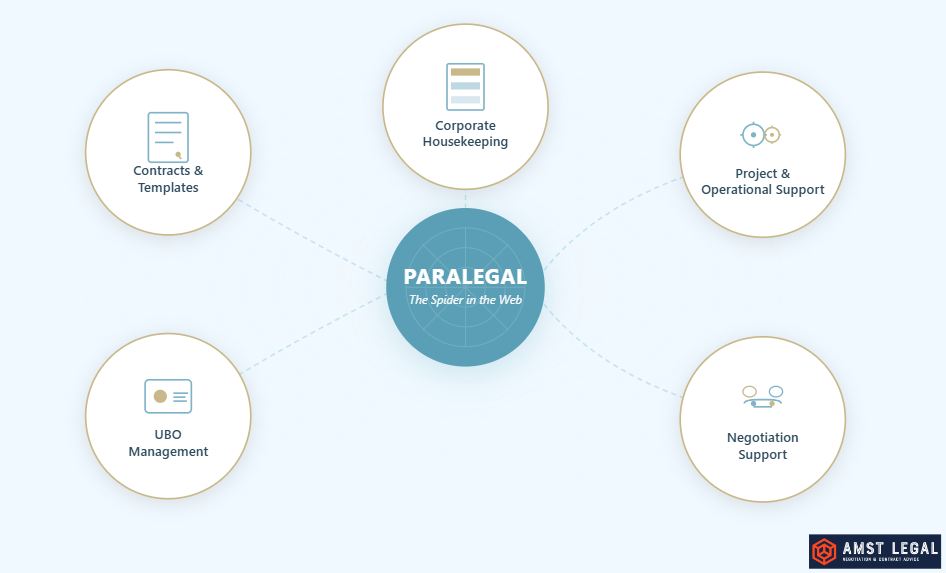
De eenvoudigste manier om uit te leggen wat een paralegal doet, is door te kijken naar de rollen die zij combineren. In de praktijk brengen paralegals vaardigheden samen van administratief medewerkers, junior en middenkader juridisch adviseurs en boekhoudkundig medewerkers. De verschillende rollen zijn als volgt.
- Administratieve ondersteuning: Paralegals zorgen ervoor dat documenten en bedrijfsgegevens nauwkeurig en toegankelijk zijn. Hierbij gaat het om bedrijfsadministratie, volmachten en UBO-registraties. Zij vormen hierdoor een perfecte aanvulling op het juridische team en zijn verantwoordelijk voor het beheer en onderhoud van deze documenten. Voor meer informatie over UBO verwijzen wij naar ons artikel “Ultimate Beneficial Ownership (UBO) uitgelegd – Wat is het en hoe creëer je een proces dat werkt” hier.
- Juridisch secretaresse: Een juridisch secretaresse organiseert dossiers, stelt correspondentie en juridische documenten op, plant vergaderingen en coördineert archivering. Paralegals bouwen hierop voort met diepgaandere juridische kennis en meer autonomie.
- Junior juridisch adviseur: De rol omvat het opstellen en proeflezen van contracten, uitvoeren van juridisch onderzoek, uitrollen van sjablonen en signaleren van risico’s. Zo kan een junior juridisch adviseur vrijwel alle taken van het juridische team uitvoeren.
- Boekhoudkundig assistent: Paralegals ondersteunen financiële en compliance functies die raakvlakken hebben met juridisch werk, zoals het bijhouden van betalingsverplichtingen, bewaken van contractdeadlines, ondersteunen van boekhouding en beheren van compliance-taken die audits beïnvloeden.
De echte waarde van een paralegal ligt in hoe deze functies samenkomen. Paralegals zien zichzelf als de ‘spin in het web’, coördineren tussen afdelingen en zorgen voor structuur en efficiëntie. Zo vervullen zij een centrale rol in het verbinden van juridische, commerciële en financiële processen.
Paralegal diensten in Europa
In Europa zijn paralegal diensten buiten juridische kringen minder zichtbaar, maar hun belang neemt toe. Veel verschillende belanghebbenden kunnen profiteren van een paralegal in het team, wat we hieronder nader zullen toelichten. Hoewel zij een cruciale rol spelen, hebben wetgevers in Nederland en Zweden geen algemene definitie of gemeenschappelijke beschrijving van de rol vastgesteld. In het Verenigd Koninkrijk definieert de National Association of Licensed Paralegals (NALP) een paralegal echter als:
“Een persoon die is opgeleid en getraind om juridische taken uit te voeren, maar die geen gekwalificeerde advocaat of procureur is.”
De NALP definieert de rol van paralegals op een manier die ook past bij Nederland en Zweden, aangezien zij advocaten en juridisch adviseurs bijstaan bij juridische taken. De rol kan echter breder zijn dan dat en de meeste paralegals in Nederland en Zweden hebben een hogere opleiding genoten.
Zie de website van de NALP en verdere informatie hier.
Onderwijs in Nederland en Zweden
In de meeste Europese landen is ‘paralegal’ geen beschermde titel, wat betekent dat professionals via verschillende routes het vakgebied kunnen betreden. Toch hebben de meesten een juridische opleiding gevolgd die hen toerust voor functies bij bedrijven en advocatenkantoren.
In Nederland is het gebruikelijk om rechten te studeren op verschillende niveaus, van hogeschool tot universiteit. Elke route biedt verschillende niveaus van juridische kennis en praktische vaardigheden, maar alle kunnen leiden tot functies als juridisch medewerker. Zoals we bij veel bedrijven hebben gezien, zijn deze functies een uitstekende springplank om carrière te maken en door te groeien naar andere functies binnen het bedrijf.
In Zweden zijn veelvoorkomende trajecten onder meer beginnen als juristassistent na de middelbare school, een tweejarige hogere beroepsopleiding met stages volgen, of rechten studeren aan de universiteit en tegelijkertijd werkervaring opdoen.
Daardoor beschikken zowel Nederlandse als Zweedse paralegals over een combinatie van academische opleiding en praktische vaardigheden, waardoor ze flexibel inzetbaar zijn voor verkoopteams, inkoopmanagers en bedrijfsjuristen.
Paralegal-diensten in de VS
In de VS is ‘paralegal’ een bekend beroep en wordt er sinds eind jaren zestig, toen ze werden erkend door de American Bar Association (ABA), een formele opleiding gegeven. De huidige definitie van een paralegal volgens de ABA luidt als volgt:
“Een paralegal is een persoon die door opleiding, training of werkervaring gekwalificeerd is en in dienst is van of wordt ingehuurd door een advocaat, advocatenkantoor, bedrijf, overheidsinstantie of andere entiteit en diespecifiek gedelegeerde inhoudelijke juridische werkzaamheden verricht waarvoor een advocaat verantwoordelijk is”.
Zie de website van de ABA hier en meer informatie over de historische achtergrond hier.
Met andere woorden, een paralegal in de VS houdt zich bezig met juridische zaken die door de verantwoordelijke advocaat zijn gedelegeerd. Hoewel er in de VS geen landelijke regelgeving bestaat, stelt Californië specifieke eisen aan paralegals.
Zie de website van de American Association for Paralegal Education hier en de website van de National Federation of Paralegal Associations hier voor meer informatie.
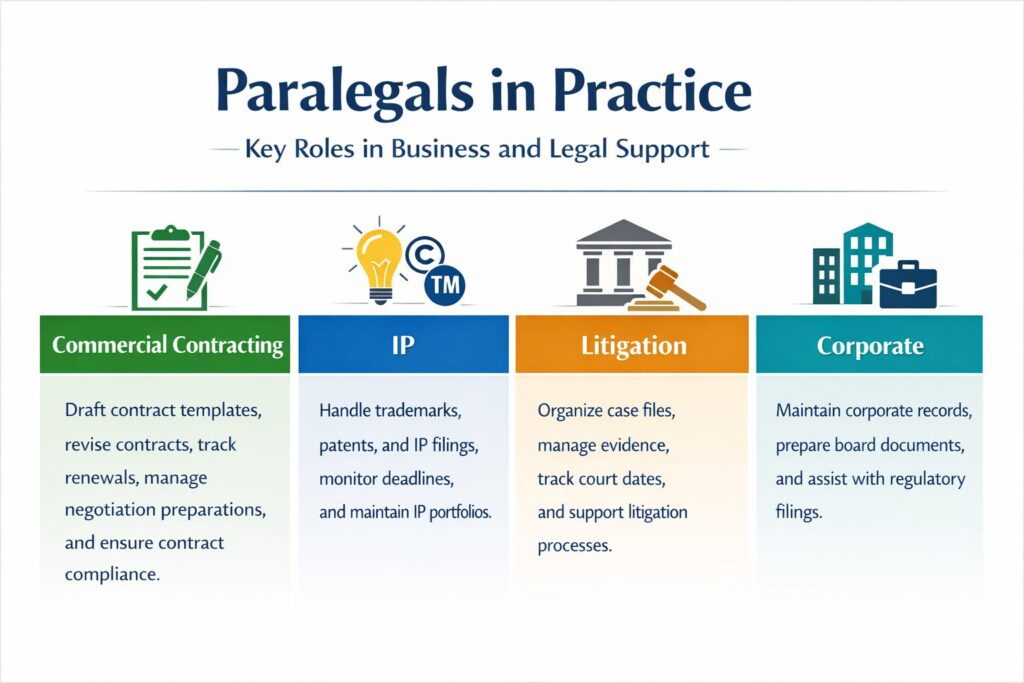
Wat paralegals bijdragen aan zakelijke en juridische teams
Waarom paralegals essentieel zijn
Paralegals bieden veel meer dan een administratief medewerker dankzij hun bachelordiploma in de rechten. Door gebruik te maken van paralegalservices krijgt u gestructureerde juridische ondersteuning, waarmee de kloof wordt overbrugd tussen routinematige documentatie en hoogwaardig juridisch werk. Daarom werken veel paralegals bij advocatenkantoren of in-house juridische teams.
Houd paralegals dus in gedachten wanneer u een advocaat of juridisch adviseur overweegt. Er zijn twee belangrijke redenen om dat te doen. Ten eerste vermindert het de juridische kosten, bijvoorbeeld door de paralegal uw adviseur te laten assisteren of voorbereidend werk uit te voeren dat geen advocaat vereist. Ten tweede stroomlijnt het gebruik van een paralegal processen zoals verkoop, inkoop en compliance. Hierdoor ontstaan mogelijkheden voor hogere inkomsten, terwijl u juridisch beschermd blijft.
Wat u kunt verwachten van paralegal diensten
Om een nog duidelijker beeld te krijgen van hoe paralegaldiensten kunnen bijdragen aan het dagelijkse werk van uw bedrijf of advocatenkantoor, gaan we dieper in op de details. Over het algemeen zijn de beperkingen van wat paralegals juridisch gezien kunnen doen vaag. Dit komt door het gebrek aan regelgeving. Natuurlijk zijn bepaalde taken uitsluitend voorbehouden aan advocaten. Dat betekent echter niet dat paralegals niet kunnen helpen bij het begin van een traject. Ook kunnen zij aan het einde een snelle controle uitvoeren. Kortom nemen zij doorgaans het tijdrovende voorbereidende werk uit handen van advocaten of juridisch adviseurs. De verantwoordelijkheden van paralegals omvatten daarbij een reeks documenten die aan de basis liggen van elk bedrijf.
Paralegale diensten worden uitgevoerd door opgeleide professionals die gedelegeerde juridische taken uitvoeren, zoals contracten onderhandelen en voorbereiden, compliance werkzaamheden en bijhouden en structureren van bedrijfsdocumentatie.
8 voorbeelden waar paralegals kunnen worden ingezet
Om een paar dingen te noemen die deel uitmaken van het werk van paralegals, omvat dit normaal gesproken:
- het maken van lijsten van bijvoorbeeld debiteuren en crediteuren, belanghebbenden, concurrenten enz.
- het structureren en proeflezen van contracten en documenten zoals bestelformulieren, geheimhoudingsverklaringen, volmachten, arbeidscontracten, algemene voorwaarden, routinematige leveranciers- of klantovereenkomsten enz.
- het voorbereiden, opstellen en archiveren van juridische en bedrijfsdocumenten (d.w.z. bedrijfsadministratie en UBO)
- het sorteren en beoordelen van bewijsmateriaal voor cliënten,
- het uitvoeren van juridisch onderzoek naar relevante onderwerpen,
- het opstellen van contract sjablonen en instructies en/of informatie voor cliënten,
- het uitrollen van nieuwe bestelformulieren, algemene voorwaarden, sjablonen en informatie naar cliënten,
- het assisteren bij compliance-kwesties (zoals gegevensprivacy, gegevensbescherming, handelscontrole, enz.).
Hoewel advocaten of juridisch adviseurs uiteindelijk natuurlijk een aantal van deze documenten moeten controleren, kunnen paralegals de eerste controle uitvoeren. Op die manier kunnen ze een brug slaan tussen de verschillende contractprocessen van een bedrijf. Tegelijkertijd zorgt dit voor structuur en kunnen advocaten of juridisch adviseurs zich concentreren op complexe kwesties. Dit biedt mogelijkheden en gestroomlijnde, maar toch kostenbesparende processen. Kortom, paralegals zijn een geweldige aanvulling voor juridische teams bij bedrijven van verschillende grootte.
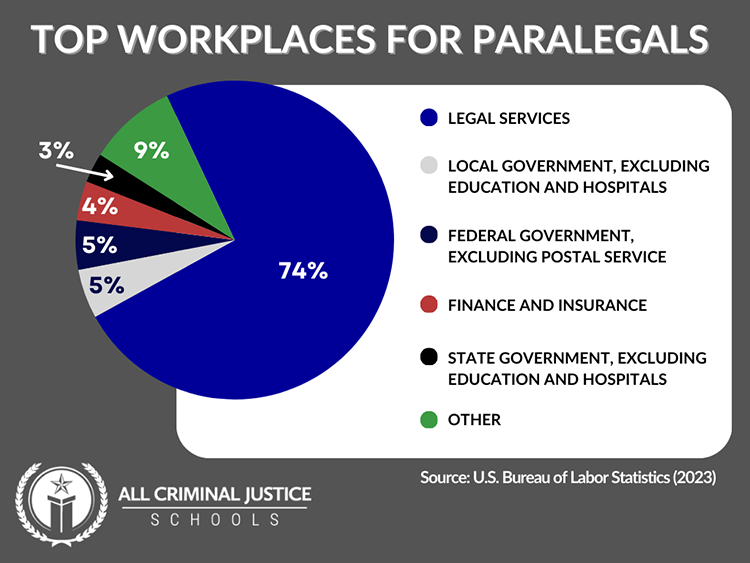
Voorbeelden van sectoren van (Amerikaanse) paralegals. Externe bron (zie link hier).
Voordelen van het inhuren van een paralegal
Praktische voordelen
We hebben besproken wat een paralegal is en voorbeelden gegeven van wat u van hun diensten kunt verwachten. Nu gaan we concreet aangeven hoe uw bedrijf of advocatenkantoor kan profiteren van het inhuren van zo’n juridisch professional. Om de verschillende voordelen te benadrukken, gaan we hierna dieper op deze punten in. Impact op het bedrijf: snelheid, duidelijkheid, kosten- en procesefficiëntie.
Bedrijven hebben vaak moeite om een evenwicht te vinden tussen commerciële snelheid en risicobeheer. Door gebruik te maken van paralegaldiensten en deze te integreren in de bedrijfsvoering, kan deze kloof worden overbrugd. Dit maakt snellere contractcycli mogelijk. Daarnaast zorgt het voor betere communicatie tussen afdelingen en lagere totale juridische kosten. Hierdoor hoeven verkoop- en inkoopteams niet langer te wachten tot routinematige juridische taken zijn uitgevoerd door een dure senior adviseur.
In plaats daarvan ontvangen zij tijdige en betaalbare ondersteuning van een paralegal. Zo blijft het bedrijf operationeel, zonder te bezuinigen op actuele juridische aspecten en compliance.
Enkele voorbeelden van voordelen in het bedrijfsleven
In het bedrijfsleven vermindert deze aanpak:
- gemiste nalevingsdeadlines die de financiering vertragen,
- vertragingen bij transacties die de verkoopcycli frustreren en
- inconsistente voorwaarden die het risico voor leveranciers vergroten.
Dit gestructureerde proces vermindert de kans op latere geschillen en stroomlijnt processen, aangezien voorwaarden consistent worden toegepast en correct worden gedocumenteerd. Juridisch adviseurs kunnen zich concentreren op complexe vragen, nieuwe mogelijkheden en gestroomlijnde, maar toch kostenbesparende processen.
Naast het inhuren van een paralegal kunnen bedrijven hun contractprocessen aanzienlijk vereenvoudigen door onze tips voor 10 manieren om uw contractprocessen te verbeteren toe te passen. Bekijk hieronder enkele van onze gepubliceerde artikelen over dit onderwerp:
- hier om te weten waarom u zich moet richten op het verbeteren van uw contractsjablonen,
- hier voor tips over het beheren van uw contractsjablonen,
- hier om de voordelen te zien van een sterke samenwerking tussen de juridische afdeling en andere afdelingen, en
- hier om te leren waarom het cruciaal is om uw juridisch adviseur leiding te laten geven aan het verbeteren van contractsjablonen.
Bovendien zijn de voordelen van paralegale diensten niet beperkt tot verbeterde bedrijfsprocessen en resultaten. Het is ook gunstig in termen van juridische impact en ondersteuning voor de verantwoordelijke juridisch adviseur. .
Juridische impact: verbeterde structuur, betere schaalbaarheid Vanuit juridisch oogpunt verminderen paralegale diensten allereerst de kans op fouten en geschillen, doordat zij zich richten op de details van documentatie en contracten. Daardoor blijven dossiers volledig en consistent, wat ervoor zorgt dat bedrijven met vertrouwen kunnen opschalen. Met name bij uitbreiding naar nieuwe markten of bijvoorbeeld tijdens de voorbereiding van een overname, leidt goed bijgehouden documentatie tot een lager risico. Tegelijkertijd positioneert het bedrijf zich als een professionele en betrouwbare partner. Bovendien kunnen juridische adviseurs zich focussen op complexe contracten, omdat zij worden ontlast van routinematig werk. Zo ontstaat een ideale basis voor juridische én zakelijke resultaten.
Image source: Forbes Outsourcing Paralegal Work: Why Remote Paralegals Are The Future Of Legal
Praktische uitdagingen bij het ontbreken van paralegale ondersteuning
Wanneer paralegale ondersteuning ontbreekt, worden bedrijven in de praktijk vaak geconfronteerd met vermijdbare knelpunten. Zo kan bijvoorbeeld de goedkeuring van contracten vertraging oplopen, omdat niemand de concepten structureert of deadlines bewaakt. Daarnaast kunnen bedrijfsaangelegenheden, zoals jaarlijkse aandeelhoudersbesluiten, eenvoudig over het hoofd worden gezien. Dit leidt vervolgens tot nalevingsrisico’s en onnodige vertragingen. In veel gevallen grijpen verkoopteams terug op verouderde sjablonen of brengen zij ad-hocwijzigingen aan. Hierdoor ontstaan inconsistenties en juridische kwetsbaarheden. Uiteindelijk verhoogt dit gebrek aan structuur de kosten op de lange termijn.
Kansen bij een goede aanpak
Daarentegen profiteren bedrijven aanzienlijk wanneer zij paralegale diensten structureel in hun workflow integreren. Niet alleen winnen zij aan snelheid, maar ook aan betrouwbaarheid. Hierdoor doorlopen contracten sneller de beoordelingscycli, aangezien steeds met de juiste versie wordt gewerkt. Daarnaast worden handtekeningen zorgvuldig bijgehouden en worden belangrijke voorwaarden uitsluitend gemarkeerd voor input van advocaten of bedrijfsjuristen wanneer dat nodig is. Bovendien blijven bedrijfsdocumenten actueel, waardoor audits, nalevingscontroles en verzoeken van investeerders direct kunnen worden afgehandeld.
Als resultaat ontstaat een soepelere samenwerking tussen zakelijke en juridische belanghebbenden. Zo weten inkoopmanagers dat de voorwaarden consistent zijn, en vertrouwen CFO’s erop dat de documenten in orde zijn. Tegelijkertijd krijgen oprichters het vertrouwen dat hun bedrijf juridisch voorbereid is op groei of omzetstijging.
Belangrijkste conclusies
- Paralegals bieden essentiële juridische ondersteuning die bedrijven van elke omvang tijd en kosten bespaart.
- Bedrijven zonder paralegal ondersteuning worden geconfronteerd met knelpunten, inconsistente contracten en compliance-risico’s.
- Door paralegal diensten te integreren met algemene juridische diensten ontstaan er soepelere processen voor verkoop-, inkoop- en juridische teams.
- Paralegal diensten zijn gunstig voor bedrijven in elke branche en voor advocatenkantoren.
- Bedrijven die investeren in paralegale ondersteuning winnen aan efficiëntie, duidelijkheid en juridische paraatheid voor groei en omzetstijging.
Conclusie en volgende stappen
Paralegale diensten zijn niet langer optioneel voor groeiende bedrijven. Allereerst bieden ze een praktische oplossing om kosten te verlagen, compliance te verbeteren en ervoor te zorgen dat contracten zonder vertraging door de pijpleiding lopen. Daarnaast vormen ze een geweldige investering om uw interne juridische adviseurs van de juiste ondersteuning te voorzien. Of uw bedrijf nu tech-deals sluit, relaties met leveranciers beheert of zich voorbereidt op een investering, blijven paralegals de gestructureerde juridische ondersteuning bieden die u nodig hebt. Zo verzekert u zich van efficiëntie en betrouwbaarheid op alle juridische vlakken.
Bij AMST Legal combineren we senior juridisch advies met deskundige paralegale diensten, waardoor we onze klanten de juiste mix van strategie en uitvoering kunnen bieden. Ons werk omvat zowel individuele projecten als tijdelijke overeenkomsten met een vast aantal uren per week, waardoor u kunt rekenen op flexibiliteit en betrouwbaarheid. Wij bieden flexibele paralegale diensten en senior juridisch advies in Stockholm, Zweden en Amsterdam, Nederland.
Bezoek amstlegal.com voor meer informatie of boek vandaag nog een consult hier of stuur een e-mail naar info@amstlegal.com.
Om hierover meer te lezen, zie de volgende artikelen: