ChatGPT Terms of Service Explained for Businesses: Updated Terms
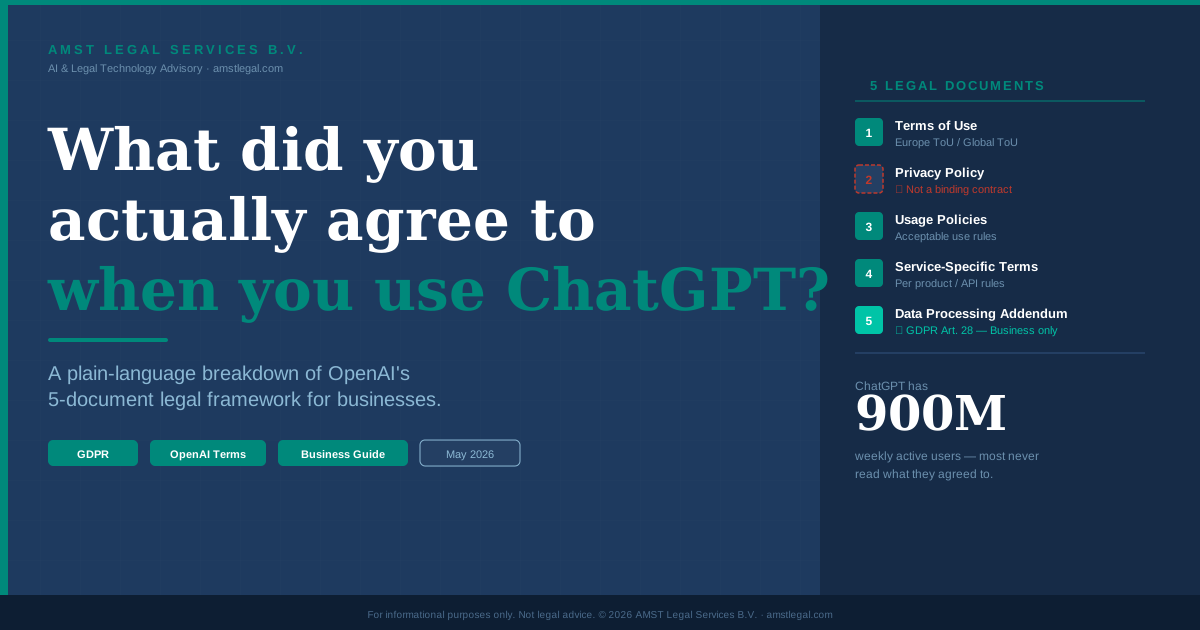
OpenAI recently updated its Terms of Use, Services Agreement, and Privacy Policy. OpenAI’s ChatGPT terms are not mentioned in one contract, but by five separate legal documents. Which ones apply to you depends on which plan you use. Because OpenAI terms are not very clear, the same questions keep coming up: which ChatGPT or OpenAI terms apply, how do the documents fit together and what does this mean for users?
The most common question we get: does ChatGPT train on my data? The short answer is yes, unless you are on a Business or Enterprise plan, or have manually opted out in your account settings. That is where most individuals and organisations run into problems. Nobody explains how the five documents fit together and which one applies to them. This is why we have written this article ‘ChatGPT Terms of Service Explained for Businesses: Updated Terms’.
Instead of one contract, OpenAI uses a layered framework. This article explains how they connect, which one applies to you, and what it means in practice for individuals and businesses using ChatGPT
TL;DR
- Will ChatGPT train on your data? Yes, except if you opt out or if you have a business contract
- The ChatGPT Terms of Service are part of a broader OpenAI contract structure made up of multiple interconnected documents.
- Different terms apply depending on whether you use ChatGPT as an individual or under a business agreement.
- The “Pro” Trap: Pro is classified as a Consumer account. By default, this model trains on your data, unless you manually opt out.
- For organisations, the OpenAI Services Agreement is the primary contract for e.g. API and enterprise use.
- Don’t forget that there are specific policies, service terms & addenda that contain a lot of operational obligations.
Why Do the ChatGPT Terms of Service Matter?
AI vendors like OpenAI, Claude, Gemini but also SaaS/Software providers like Salesforce, Uber, Atlassian, Microsoft,etc. increasingly rely on layered contracts that incorporate multiple documents by reference. This normally includes an order form, a Master Services Agreement, general terms, service-specific terms and policies and addenda. When it comes to OpenAI that is no exception.
What really matters in practice is the distinction between consumer (individual) use and business use, as different terms apply to each.
- Consumer vs business use determines your risk position: Even when employees use ChatGPT for work, they may still fall under consumer Terms of Use. In practice, this means different data usage rules, liability allocation, and protections apply than the organization expects. We see similar issues across other AI providers (see our article on Claude AI: Anthropic’s Claude AI Updates – Impact on Privacy & Confidentiality). For business use, organizations should ensure employees only use OpenAI services under company-approved terms.
- Layered contracts mean obligations are spread across documents: Different documents govern different aspects of the relationship. Teams often assume one set of terms applies, while key obligations sit in policies or service-specific terms. Because these documents are incorporated by reference and updated regularly, obligations can change without renegotiation. This creates operational risk if no one actively monitors updates.
This type of contractual framework is not uncommon. Many large Tech, SaaS and AI providers use similar contractual structures. Nonetheless, the interlinked nature of these contracts means that each document creates distinct rights and obligations that operate together as a whole. This makes it interesting to understand these contracts more in-depth.
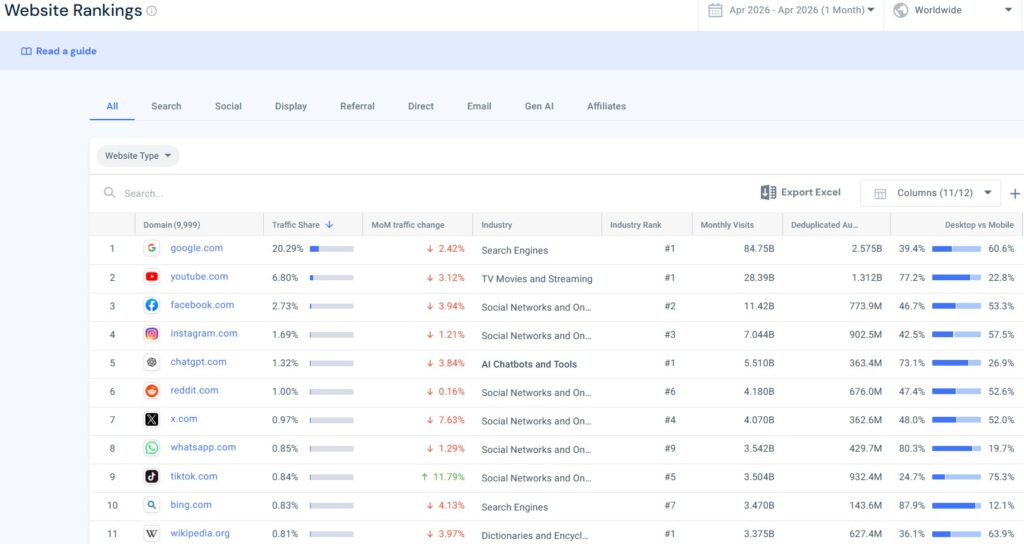
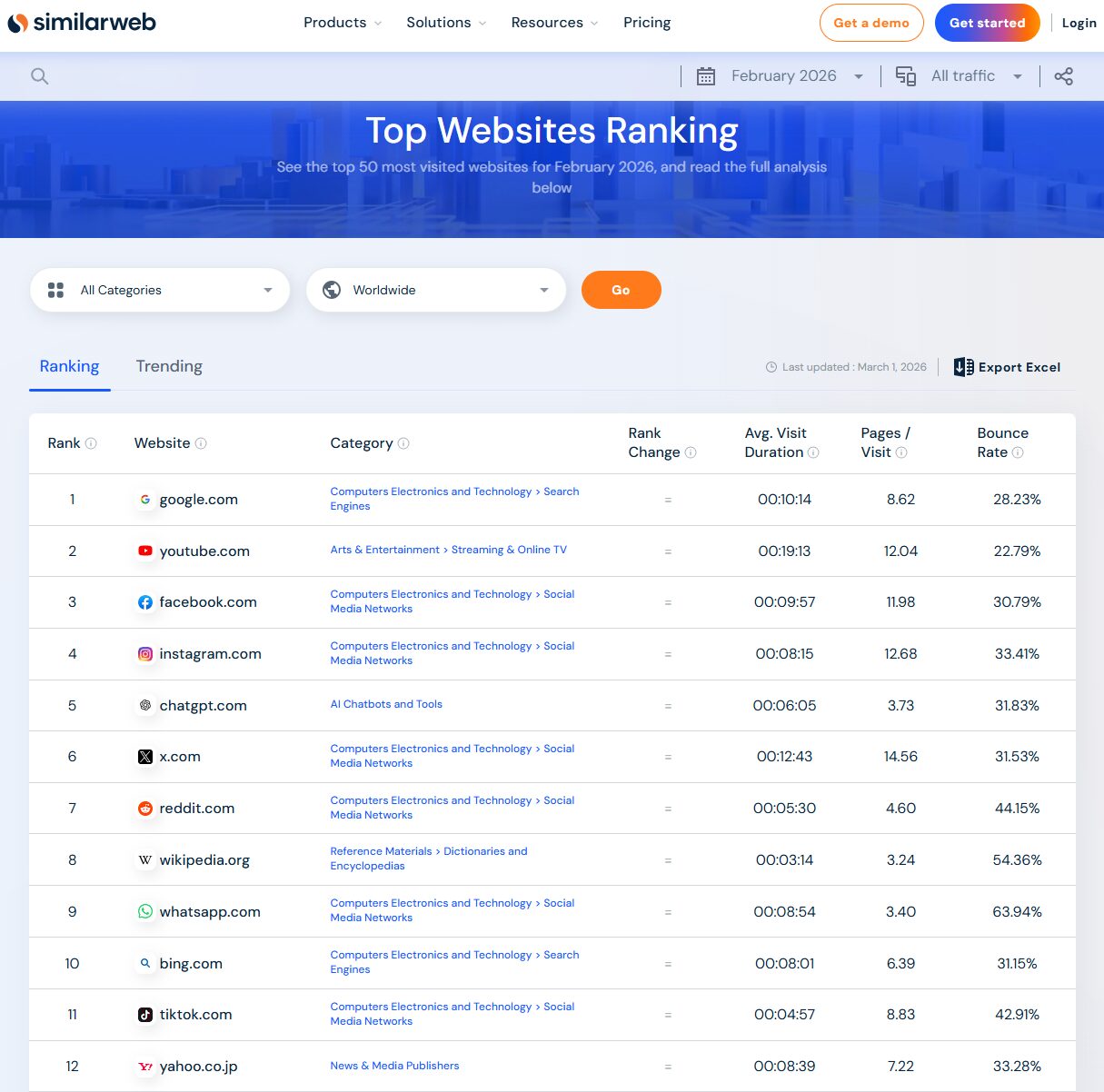
According to Similarweb’s Top Websites Ranking April 2026 (see here), ChatGPT is one of the most used websites globally.. This makes understanding of their governing terms particularly interesting.
ChatGPT and OpenAI Contract Structure Explained
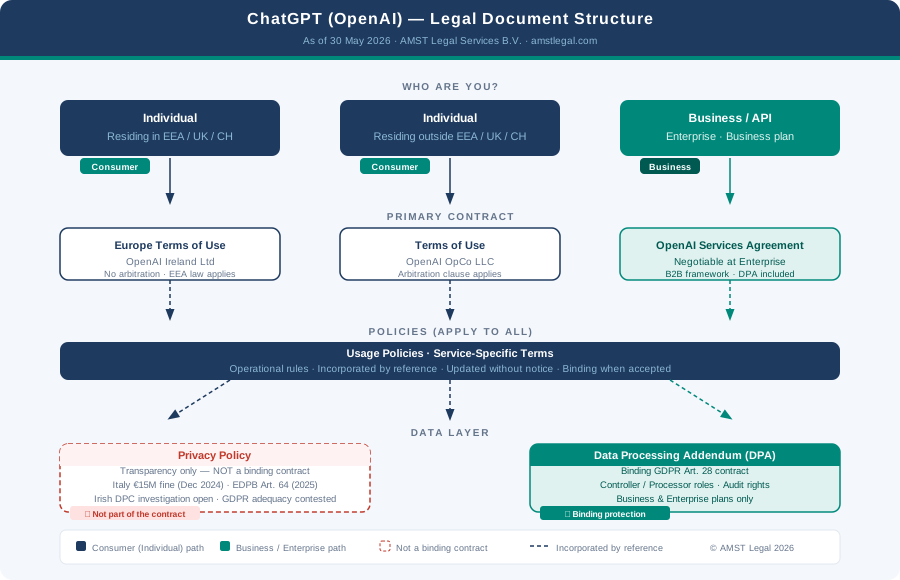
At a high level, OpenAI does not rely on a single contract. Instead, it uses a layered contractual framework where multiple documents operate together. This approach is standard across SaaS and AI providers, but it requires a different way of reading contracts. Rather than reviewing one agreement in isolation, organisations need to understand how several documents interact and which one takes precedence in practice. (for more details, see OpenAI’s article here)
The three general terms that can be applicable revolve around three primary actors:
- Individuals (residing in the EEA),
- Individuals (residing outside the EEA), or
- Businesses (non-specific location).
The key is to understand that only one of these above documents forms part of the contractual framework between you (the company you work at) and OpenAI. Moreover, these general terms acts as a connection point which pulls in additional policies and addenda. Because, most importantly, these governing agreements do not stand alone as OpenAI’s contractual structure relies heavily on incorporation by reference. However, as a basic starting point, the general terms and data privacy related policies deserves an in-depth explanation on its own.
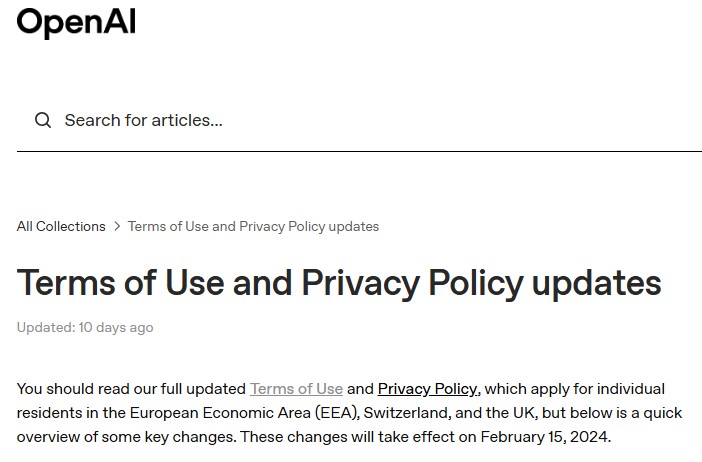
OpenAI’s explanation about the new terms is unfortunately unclear and in some places incomplete (see for yourself here), This is exactly why we wrote this article. OpenAI maintains a dedicated help article explaining their Terms of Service updates. Given that 900 million people use ChatGPT every week, you would expect this to be a reliable reference point. It is not — the article references conflicting dates and leaves the consumer/business distinction unexplained entirely.
ChatGPT Terms of Service Explained – How the Documents Actually Fit Together
Below we explain the full structure in plain language. OpenAI’s framework is built on five documents, each covering a different part of the relationship between you and OpenAI. Understanding how they connect is what most articles, including OpenAI’s own, fail to do clearly. Here is the version that actually makes sense.
Terms of Use (Individual Use)
The OpenAI Terms of Use govern individual use of ChatGPT and other OpenAI services. In practice, these are the default terms that apply unless an organisation has entered into a business agreement. This distinction is critical because many employees use ChatGPT in a professional context while still operating under individual terms.
From a legal and commercial perspective, the Terms of Use focus on access and behaviour. They define who can use the service, what constitutes acceptable use, and how content is treated. They also include limitations of liability and disclaimers that are typical for consumer-facing platforms. However, they are not designed to address enterprise-level concerns such as negotiated liability caps, audit rights, or structured data protection obligations.
As a result, organisations that rely on ChatGPT without moving to a business setup may unknowingly accept a risk profile that is materially different from what they would expect in a typical vendor relationship. This is not a drafting issue—it is a structural one.
Differences Europe Terms of Use vs Terms of Use
For individuals using OpenAI’s services, which is dependent on which account plan you are using, there is only one distinction in which contractual framework applies. The determining factor for whether the Europe Terms of Use or the Terms of Use is applicable is where you live. If you reside in the EEA, Switzerland or the UK, the Europe Terms of Use governs the usage of for example ChatGPT. On the contrary, if you reside outside of the EEA, Switzerland, or the UK, the Terms of Use are applicable.
Both these agreements governs individual’s use of OpenAI’s services. Structurally, both contracts covers the same services, places the same user obligations on the user and ensures that users retain rights to their input/output for example.
A few differences highlighted:
- Contracting parties differ depending on your location as residents in the EEA or Switzerland contract with OpenAI Ireland Ltd, while UK and US residents enters into a contractual relationship with OpenAI OpCo LLC.
- Content of terms, linked to local legal requirements. For example, the Terms of Use, applicable on UK and US residents, allow arbitration while the Europe Terms of Use doesn’t. oth the Europe Terms of Use and the Terms of Use specify that the Privacy Policy is not a part of the contract, but it remains essential for understanding data handling practices.
What is not different is that both Terms of Use specify that the Privacy Policy is not a part of the terms, but it remains essential for understanding data handling practices.
Europe Privacy Policy vs Privacy Policy
The general terms point out that the privacy policy is not part of the contractual framework between individuals and OpenAI. Despite this, the policies are still present and affect how OpenAI handles your data. In terms of which policies may be applicable, the Privacy Policy applies in general.
Since data protection regulation are dependent on local legal requirements, there are distinct privacy policies for specific locations. For example, if you reside in the EEA, Switzerland or the UK the Europe Privacy Policy is relevant and for US residents, the US Privacy Policy is applicable.
Do note that there are additional privacy policies for other locations too. This does however showcase that local legal requirements are taken into consideration. The main difference between these are the level of detail and connection to applicable data privacy regulation, which evidently does differ between Europe and the US.
OpenAI Contract Structure for Businesses
OpenAI Services Agreement Explained (Business Use)
As mentioned, businesses generally operate under separate terms. This is the same within OpenAI’s contractual framework through the OpenAI Services Agreement. This agreement applies to API customers and enterprise users and governs commercial deployment of OpenAI models. Most crucial is what type of user you are; i.e., if you are using a subscription plan for individuals (also Pro!), these business terms won’t apply. Because of this, it is relevant to check what type of subscription you use.
Unlike the Terms of Use, this agreement is structured as a commercial contract and is intended to be reviewed, negotiated, and managed by legal and procurement teams.
This agreement governs the key commercial and legal elements of the relationship. It addresses pricing and billing, defines permitted use of the models, allocates liability, and sets out intellectual property positions. In addition, it establishes how data is handled in a business context, typically in conjunction with a Data Processing Addendum.
What matters in practice is that this agreement fundamentally changes the risk allocation. It moves the relationship from a consumer-style framework to a business-to-business structure, where expectations around accountability, data protection, and commercial certainty are materially different. For organisations deploying AI at scale, this is the agreement that should anchor internal governance and contract review processes.
Service Terms (Product-Specific Rules)
On top of the primary contract sit the Service Terms, which apply to specific OpenAI products or functionalities. These are often overlooked because they are not always presented as standalone agreements. However, they are incorporated by reference and can materially affect how services are used in practice.
Service Terms typically define operational and technical conditions. For example, they may set limits on how APIs can be used, impose restrictions on certain use cases, or clarify how specific features function. In many cases, these terms translate directly into product-level constraints that business and technical teams must follow.
From a legal perspective, the key point is that Service Terms are binding once incorporated. From a business perspective, they often contain the rules that teams encounter day-to-day. Ignoring them creates a gap between what the contract allows and how the service is actually used.
Policies (Usage and Operational Rules)
In addition to contractual terms, OpenAI maintains a set of policies that apply across its services. These policies typically cover acceptable use, safety requirements, and operational restrictions. While they may not always read like traditional contractual clauses, they can still have binding effect when incorporated into the main agreement.
In practice, policies often contain the most immediate constraints on how ChatGPT and related services can be used. For example, they may prohibit certain categories of content, restrict high-risk use cases, or impose compliance-related obligations. These are not theoretical limitations—they directly affect how business teams deploy AI in real scenarios.
Another important feature is that policies are updated regularly. Because they are incorporated by reference, changes can apply without renegotiation. This creates a dynamic environment where compliance is not a one-time exercise but an ongoing process.
Privacy Policy vs Data Processing Addendum
A common source of confusion is the difference between the Privacy Policy and the Data Processing Addendum (DPA). Although both relate to data, they serve fundamentally different purposes.
The Privacy Policy explains how OpenAI handles data in general terms. It is primarily aimed at transparency and user information, particularly in a consumer context. However, it does not typically form part of the contractual framework in the same way as other documents.
The Data Processing Addendum, by contrast, is a contractual document. It applies in business relationships and governs how personal data is processed on behalf of the customer. It defines roles such as controller and processor, sets out security measures, and addresses regulatory requirements such as GDPR compliance.
For organisations, the distinction is critical. The Privacy Policy tells you what happens in practice, while the DPA defines what OpenAI is legally required to do. Relying on the former instead of the latter can lead to incorrect assumptions about compliance and risk allocation.
Does ChatGPT Train on Your Data?
One of the most frequently asked questions is whether ChatGPT trains on your data. The answer depends on which terms apply.
Under consumer use, ChatGPT may use inputs and outputs to improve its models, unless users actively opt out where that option is available. This reflects the default structure of many consumer AI services, where data contributes to ongoing model development.
Under the OpenAI Services Agreement, the position is different. In a business context, customer data is generally not used for training purposes. This distinction is not merely technical—it is contractual.
In practice, this creates a clear risk scenario. Employees may use ChatGPT under consumer terms, while the organisation assumes that enterprise-level protections apply. The tool is the same, but the legal framework is not. As a result, understanding which terms apply is essential for managing both data risk and internal compliance.
The data protection layer’s place
So, what other terms may be applicable as well? Well, the Data Processing Addendum sits alongside the OpenAI Services Agreement through reference. It governs how OpenAI processes personal data on behalf of the customer. Crucially, the DPA, not the general privacy policy nor the location specific privacy policies, creates the contractual data protection obligations. Business teams often confuse the two, but legally they serve very different purposes.
On one hand, the Data Processing Addendum is critical for GDPR and similar regimes and defines roles (controller vs processor), sets out processing instructions and security measures, addresses cross-border transfers and sub-processors. This is relevant as it sets out which obligations your organization shall follow in terms of data privacy. On the other hand, the privacy policies is relevant as it sets out what kind of protection OpenAI offers to their customers. That refers to the actual users, for example employees in your company.
How To Handle AI Usage
Defining Key Documents and Processes
AI usage intersects with several contractual touch-points like the general terms and data handling policies. Therefore, hidden clauses allowing various things may be applicable. Understanding of overarching responsibilities and rights, like how data is used, and how outputs are verified is recommended. For example, companies should ensure that no confidential or client data may be submitted to public AI interfaces unless approved safeguards exist.
Connecting Legal, Sales, and Procurement Functions
In many organizations, sales teams use AI for proposal generation while legal reviews contracts separately. Procurement teams vet vendors but may not assess AI clauses. Consequently, a misalignment arises. Depending on what terms apply, there may be a risk that confidential information is shared with the AI company. Therefore, collaboration between for example Sales and Legal is key to ensure that OpenAI’s terms, and similar clauses from other AI providers, are reviewed beforehand.
Balancing Flexibility and Risk Reduction
AI adoption should not paralyze innovation. Instead, companies can create “approved use” guidelines outlining permissible AI tools and inputs. This approach preserves flexibility for business teams while embedding guardrails against data misuse. Moreover, including AI-specific language in supplier and client contracts ensures accountability.
Key Takeaways
- OpenAI’s contract structure is layered by multiple documents,
- Different OpenAI terms apply to EU individuals, non-EU individuals, and businesses,
- Policies and addenda often contain the most practical obligations,
- Understanding the structure improves both commercial and legal outcomes, and
- Proactive mapping and monitoring reduce risk and delays.
Frequently Asked Questions
Q: When should we use the OpenAI Services Agreement instead of the Terms of Use?
A: When ChatGPT or OpenAI services are used in a business context, especially via APIs or enterprise solutions. This ensures appropriate commercial and data protection terms apply.
Q: What is the real risk if we get this wrong?
A: The main risk is a mismatch between assumed protections and actual terms. This can lead to unintended data use, limited liability coverage, and compliance issues.
Q: Who should own this internally?
A: Typically legal and procurement should define the framework, but IT and business teams must be involved to ensure actual usage aligns with approved terms.
Q: Does this apply differently across jurisdictions?
A: Yes. For example, EEA-specific Terms of Use and privacy frameworks may apply depending on location. This affects enforcement and regulatory compliance.
Q: Do we need tailored legal advice or are standard terms enough?
A: For low-risk use cases, standard terms may be sufficient. However, for enterprise use or integration into products, tailored review is recommended.
Conclusion & Call to Action
Understanding which subscriptions equals what applicable contract is no longer optional for organisations using SaaS or AI at scale. It directly affects risk allocation, commercial commitments, and strategic flexibility. At AMST Legal, we regularly support clients in reviewing, negotiating, and operationalising AI and SaaS contracts, either on a project basis or as interim in-house counsel.
If you want to better understand how OpenAI’s contracts affect your business, or if you are preparing for negotiations, audits, or customer discussions, we can help. Visit amstlegal.com to learn more or book a consultation today, or email info@amstlegal.com.
Note: this an updated draft of the article of January 2025: Ultimate Guide how ChatGPT, Perplexity and Claude use Your Data.