ChatGPT Terms of Service Explained for Businesses: Updated Terms
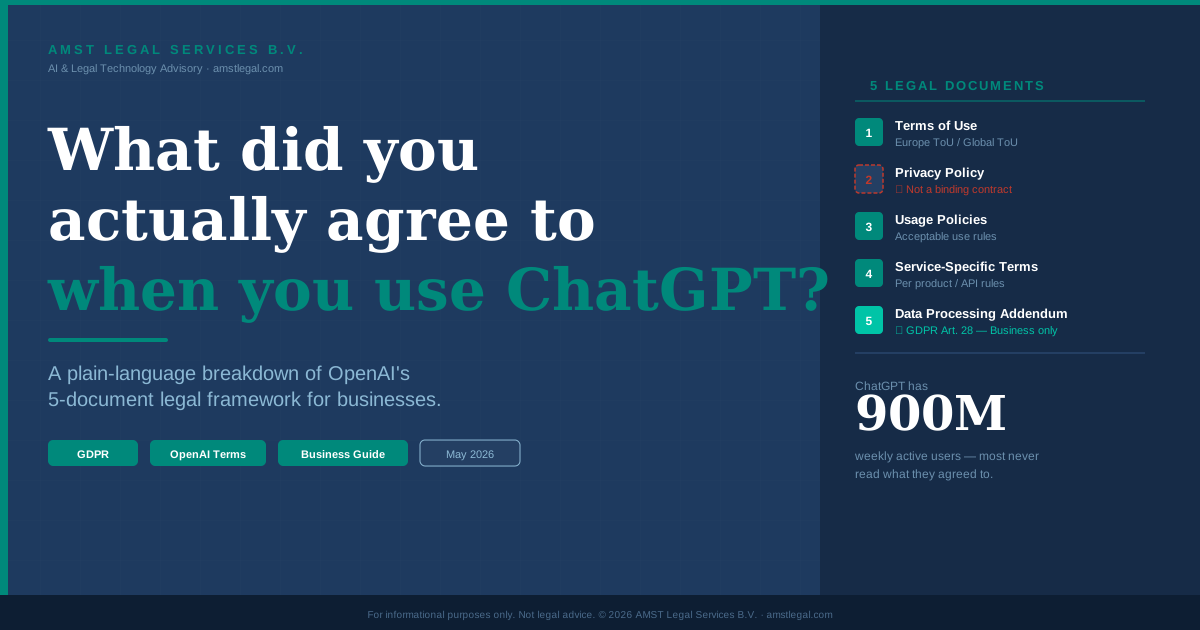
OpenAI recently updated its Terms of Use, Services Agreement, and Privacy Policy. OpenAI’s ChatGPT terms are not mentioned in one contract, but by five separate legal documents. Which ones apply to you depends on which plan you use. Because OpenAI terms are not very clear, the same questions keep coming up: which ChatGPT or OpenAI terms apply, how do the documents fit together and what does this mean for users?
The most common question we get: does ChatGPT train on my data? The short answer is yes, unless you are on a Business or Enterprise plan, or have manually opted out in your account settings. That is where most individuals and organisations run into problems. Nobody explains how the five documents fit together and which one applies to them. This is why we have written this article ‘ChatGPT Terms of Service Explained for Businesses: Updated Terms’.
Instead of one contract, OpenAI uses a layered framework. This article explains how they connect, which one applies to you, and what it means in practice for individuals and businesses using ChatGPT
TL;DR
- Will ChatGPT train on your data? Yes, except if you opt out or if you have a business contract
- The ChatGPT Terms of Service are part of a broader OpenAI contract structure made up of multiple interconnected documents.
- Different terms apply depending on whether you use ChatGPT as an individual or under a business agreement.
- The “Pro” Trap: Pro is classified as a Consumer account. By default, this model trains on your data, unless you manually opt out.
- For organisations, the OpenAI Services Agreement is the primary contract for e.g. API and enterprise use.
- Don’t forget that there are specific policies, service terms & addenda that contain a lot of operational obligations.
Why Do the ChatGPT Terms of Service Matter?
AI vendors like OpenAI, Claude, Gemini but also SaaS/Software providers like Salesforce, Uber, Atlassian, Microsoft,etc. increasingly rely on layered contracts that incorporate multiple documents by reference. This normally includes an order form, a Master Services Agreement, general terms, service-specific terms and policies and addenda. When it comes to OpenAI that is no exception.
What really matters in practice is the distinction between consumer (individual) use and business use, as different terms apply to each.
- Consumer vs business use determines your risk position: Even when employees use ChatGPT for work, they may still fall under consumer Terms of Use. In practice, this means different data usage rules, liability allocation, and protections apply than the organization expects. We see similar issues across other AI providers (see our article on Claude AI: Anthropic’s Claude AI Updates – Impact on Privacy & Confidentiality). For business use, organizations should ensure employees only use OpenAI services under company-approved terms.
- Layered contracts mean obligations are spread across documents: Different documents govern different aspects of the relationship. Teams often assume one set of terms applies, while key obligations sit in policies or service-specific terms. Because these documents are incorporated by reference and updated regularly, obligations can change without renegotiation. This creates operational risk if no one actively monitors updates.
This type of contractual framework is not uncommon. Many large Tech, SaaS and AI providers use similar contractual structures. Nonetheless, the interlinked nature of these contracts means that each document creates distinct rights and obligations that operate together as a whole. This makes it interesting to understand these contracts more in-depth.
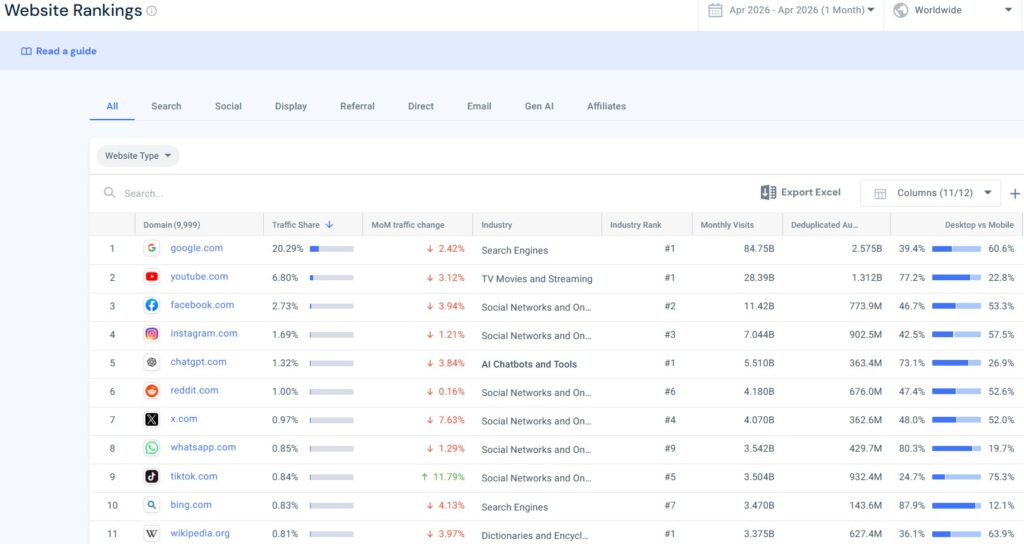
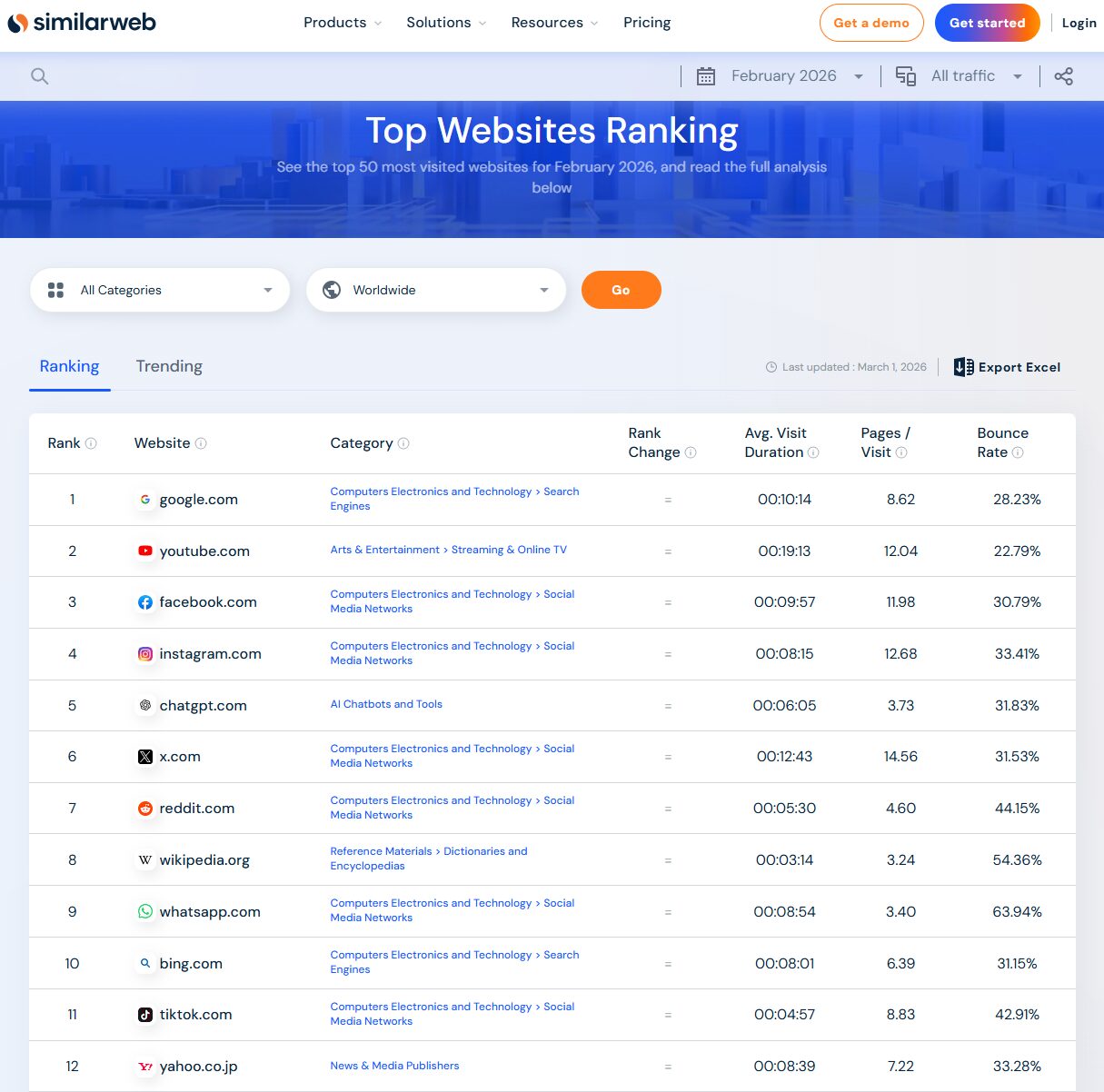
According to Similarweb’s Top Websites Ranking April 2026 (see here), ChatGPT is one of the most used websites globally.. This makes understanding of their governing terms particularly interesting.
ChatGPT and OpenAI Contract Structure Explained
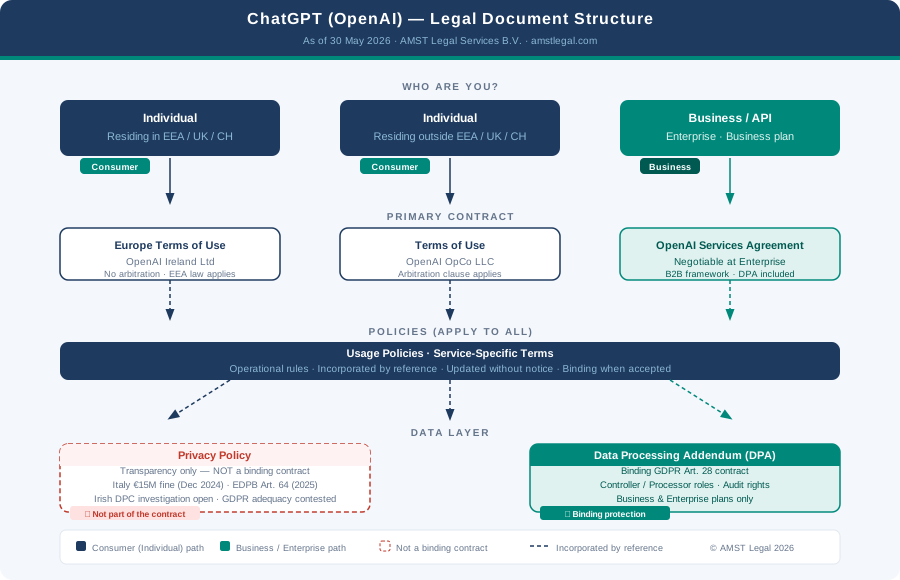
At a high level, OpenAI does not rely on a single contract. Instead, it uses a layered contractual framework where multiple documents operate together. This approach is standard across SaaS and AI providers, but it requires a different way of reading contracts. Rather than reviewing one agreement in isolation, organisations need to understand how several documents interact and which one takes precedence in practice. (for more details, see OpenAI’s article here)
The three general terms that can be applicable revolve around three primary actors:
- Individuals (residing in the EEA),
- Individuals (residing outside the EEA), or
- Businesses (non-specific location).
The key is to understand that only one of these above documents forms part of the contractual framework between you (the company you work at) and OpenAI. Moreover, these general terms acts as a connection point which pulls in additional policies and addenda. Because, most importantly, these governing agreements do not stand alone as OpenAI’s contractual structure relies heavily on incorporation by reference. However, as a basic starting point, the general terms and data privacy related policies deserves an in-depth explanation on its own.
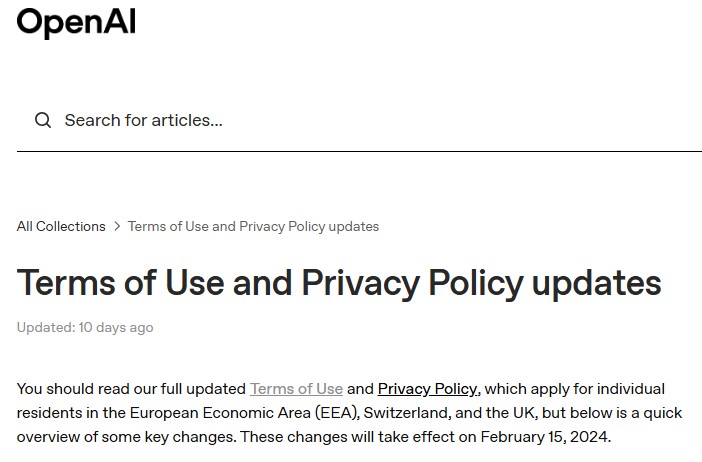
OpenAI’s explanation about the new terms is unfortunately unclear and in some places incomplete (see for yourself here), This is exactly why we wrote this article. OpenAI maintains a dedicated help article explaining their Terms of Service updates. Given that 900 million people use ChatGPT every week, you would expect this to be a reliable reference point. It is not — the article references conflicting dates and leaves the consumer/business distinction unexplained entirely.
ChatGPT Terms of Service Explained – How the Documents Actually Fit Together
Below we explain the full structure in plain language. OpenAI’s framework is built on five documents, each covering a different part of the relationship between you and OpenAI. Understanding how they connect is what most articles, including OpenAI’s own, fail to do clearly. Here is the version that actually makes sense.
Terms of Use (Individual Use)
The OpenAI Terms of Use govern individual use of ChatGPT and other OpenAI services. In practice, these are the default terms that apply unless an organisation has entered into a business agreement. This distinction is critical because many employees use ChatGPT in a professional context while still operating under individual terms.
From a legal and commercial perspective, the Terms of Use focus on access and behaviour. They define who can use the service, what constitutes acceptable use, and how content is treated. They also include limitations of liability and disclaimers that are typical for consumer-facing platforms. However, they are not designed to address enterprise-level concerns such as negotiated liability caps, audit rights, or structured data protection obligations.
As a result, organisations that rely on ChatGPT without moving to a business setup may unknowingly accept a risk profile that is materially different from what they would expect in a typical vendor relationship. This is not a drafting issue—it is a structural one.
Differences Europe Terms of Use vs Terms of Use
For individuals using OpenAI’s services, which is dependent on which account plan you are using, there is only one distinction in which contractual framework applies. The determining factor for whether the Europe Terms of Use or the Terms of Use is applicable is where you live. If you reside in the EEA, Switzerland or the UK, the Europe Terms of Use governs the usage of for example ChatGPT. On the contrary, if you reside outside of the EEA, Switzerland, or the UK, the Terms of Use are applicable.
Both these agreements governs individual’s use of OpenAI’s services. Structurally, both contracts covers the same services, places the same user obligations on the user and ensures that users retain rights to their input/output for example.
A few differences highlighted:
- Contracting parties differ depending on your location as residents in the EEA or Switzerland contract with OpenAI Ireland Ltd, while UK and US residents enters into a contractual relationship with OpenAI OpCo LLC.
- Content of terms, linked to local legal requirements. For example, the Terms of Use, applicable on UK and US residents, allow arbitration while the Europe Terms of Use doesn’t. oth the Europe Terms of Use and the Terms of Use specify that the Privacy Policy is not a part of the contract, but it remains essential for understanding data handling practices.
What is not different is that both Terms of Use specify that the Privacy Policy is not a part of the terms, but it remains essential for understanding data handling practices.
Europe Privacy Policy vs Privacy Policy
The general terms point out that the privacy policy is not part of the contractual framework between individuals and OpenAI. Despite this, the policies are still present and affect how OpenAI handles your data. In terms of which policies may be applicable, the Privacy Policy applies in general.
Since data protection regulation are dependent on local legal requirements, there are distinct privacy policies for specific locations. For example, if you reside in the EEA, Switzerland or the UK the Europe Privacy Policy is relevant and for US residents, the US Privacy Policy is applicable.
Do note that there are additional privacy policies for other locations too. This does however showcase that local legal requirements are taken into consideration. The main difference between these are the level of detail and connection to applicable data privacy regulation, which evidently does differ between Europe and the US.
OpenAI Contract Structure for Businesses
OpenAI Services Agreement Explained (Business Use)
As mentioned, businesses generally operate under separate terms. This is the same within OpenAI’s contractual framework through the OpenAI Services Agreement. This agreement applies to API customers and enterprise users and governs commercial deployment of OpenAI models. Most crucial is what type of user you are; i.e., if you are using a subscription plan for individuals (also Pro!), these business terms won’t apply. Because of this, it is relevant to check what type of subscription you use.
Unlike the Terms of Use, this agreement is structured as a commercial contract and is intended to be reviewed, negotiated, and managed by legal and procurement teams.
This agreement governs the key commercial and legal elements of the relationship. It addresses pricing and billing, defines permitted use of the models, allocates liability, and sets out intellectual property positions. In addition, it establishes how data is handled in a business context, typically in conjunction with a Data Processing Addendum.
What matters in practice is that this agreement fundamentally changes the risk allocation. It moves the relationship from a consumer-style framework to a business-to-business structure, where expectations around accountability, data protection, and commercial certainty are materially different. For organisations deploying AI at scale, this is the agreement that should anchor internal governance and contract review processes.
Service Terms (Product-Specific Rules)
On top of the primary contract sit the Service Terms, which apply to specific OpenAI products or functionalities. These are often overlooked because they are not always presented as standalone agreements. However, they are incorporated by reference and can materially affect how services are used in practice.
Service Terms typically define operational and technical conditions. For example, they may set limits on how APIs can be used, impose restrictions on certain use cases, or clarify how specific features function. In many cases, these terms translate directly into product-level constraints that business and technical teams must follow.
From a legal perspective, the key point is that Service Terms are binding once incorporated. From a business perspective, they often contain the rules that teams encounter day-to-day. Ignoring them creates a gap between what the contract allows and how the service is actually used.
Policies (Usage and Operational Rules)
In addition to contractual terms, OpenAI maintains a set of policies that apply across its services. These policies typically cover acceptable use, safety requirements, and operational restrictions. While they may not always read like traditional contractual clauses, they can still have binding effect when incorporated into the main agreement.
In practice, policies often contain the most immediate constraints on how ChatGPT and related services can be used. For example, they may prohibit certain categories of content, restrict high-risk use cases, or impose compliance-related obligations. These are not theoretical limitations—they directly affect how business teams deploy AI in real scenarios.
Another important feature is that policies are updated regularly. Because they are incorporated by reference, changes can apply without renegotiation. This creates a dynamic environment where compliance is not a one-time exercise but an ongoing process.
Privacy Policy vs Data Processing Addendum
A common source of confusion is the difference between the Privacy Policy and the Data Processing Addendum (DPA). Although both relate to data, they serve fundamentally different purposes.
The Privacy Policy explains how OpenAI handles data in general terms. It is primarily aimed at transparency and user information, particularly in a consumer context. However, it does not typically form part of the contractual framework in the same way as other documents.
The Data Processing Addendum, by contrast, is a contractual document. It applies in business relationships and governs how personal data is processed on behalf of the customer. It defines roles such as controller and processor, sets out security measures, and addresses regulatory requirements such as GDPR compliance.
For organisations, the distinction is critical. The Privacy Policy tells you what happens in practice, while the DPA defines what OpenAI is legally required to do. Relying on the former instead of the latter can lead to incorrect assumptions about compliance and risk allocation.
Does ChatGPT Train on Your Data?
One of the most frequently asked questions is whether ChatGPT trains on your data. The answer depends on which terms apply.
Under consumer use, ChatGPT may use inputs and outputs to improve its models, unless users actively opt out where that option is available. This reflects the default structure of many consumer AI services, where data contributes to ongoing model development.
Under the OpenAI Services Agreement, the position is different. In a business context, customer data is generally not used for training purposes. This distinction is not merely technical—it is contractual.
In practice, this creates a clear risk scenario. Employees may use ChatGPT under consumer terms, while the organisation assumes that enterprise-level protections apply. The tool is the same, but the legal framework is not. As a result, understanding which terms apply is essential for managing both data risk and internal compliance.
The data protection layer’s place
So, what other terms may be applicable as well? Well, the Data Processing Addendum sits alongside the OpenAI Services Agreement through reference. It governs how OpenAI processes personal data on behalf of the customer. Crucially, the DPA, not the general privacy policy nor the location specific privacy policies, creates the contractual data protection obligations. Business teams often confuse the two, but legally they serve very different purposes.
On one hand, the Data Processing Addendum is critical for GDPR and similar regimes and defines roles (controller vs processor), sets out processing instructions and security measures, addresses cross-border transfers and sub-processors. This is relevant as it sets out which obligations your organization shall follow in terms of data privacy. On the other hand, the privacy policies is relevant as it sets out what kind of protection OpenAI offers to their customers. That refers to the actual users, for example employees in your company.
How To Handle AI Usage
Defining Key Documents and Processes
AI usage intersects with several contractual touch-points like the general terms and data handling policies. Therefore, hidden clauses allowing various things may be applicable. Understanding of overarching responsibilities and rights, like how data is used, and how outputs are verified is recommended. For example, companies should ensure that no confidential or client data may be submitted to public AI interfaces unless approved safeguards exist.
Connecting Legal, Sales, and Procurement Functions
In many organizations, sales teams use AI for proposal generation while legal reviews contracts separately. Procurement teams vet vendors but may not assess AI clauses. Consequently, a misalignment arises. Depending on what terms apply, there may be a risk that confidential information is shared with the AI company. Therefore, collaboration between for example Sales and Legal is key to ensure that OpenAI’s terms, and similar clauses from other AI providers, are reviewed beforehand.
Balancing Flexibility and Risk Reduction
AI adoption should not paralyze innovation. Instead, companies can create “approved use” guidelines outlining permissible AI tools and inputs. This approach preserves flexibility for business teams while embedding guardrails against data misuse. Moreover, including AI-specific language in supplier and client contracts ensures accountability.
Key Takeaways
- OpenAI’s contract structure is layered by multiple documents,
- Different OpenAI terms apply to EU individuals, non-EU individuals, and businesses,
- Policies and addenda often contain the most practical obligations,
- Understanding the structure improves both commercial and legal outcomes, and
- Proactive mapping and monitoring reduce risk and delays.
Frequently Asked Questions
Q: When should we use the OpenAI Services Agreement instead of the Terms of Use?
A: When ChatGPT or OpenAI services are used in a business context, especially via APIs or enterprise solutions. This ensures appropriate commercial and data protection terms apply.
Q: What is the real risk if we get this wrong?
A: The main risk is a mismatch between assumed protections and actual terms. This can lead to unintended data use, limited liability coverage, and compliance issues.
Q: Who should own this internally?
A: Typically legal and procurement should define the framework, but IT and business teams must be involved to ensure actual usage aligns with approved terms.
Q: Does this apply differently across jurisdictions?
A: Yes. For example, EEA-specific Terms of Use and privacy frameworks may apply depending on location. This affects enforcement and regulatory compliance.
Q: Do we need tailored legal advice or are standard terms enough?
A: For low-risk use cases, standard terms may be sufficient. However, for enterprise use or integration into products, tailored review is recommended.
Conclusion & Call to Action
Understanding which subscriptions equals what applicable contract is no longer optional for organisations using SaaS or AI at scale. It directly affects risk allocation, commercial commitments, and strategic flexibility. At AMST Legal, we regularly support clients in reviewing, negotiating, and operationalising AI and SaaS contracts, either on a project basis or as interim in-house counsel.
If you want to better understand how OpenAI’s contracts affect your business, or if you are preparing for negotiations, audits, or customer discussions, we can help. Visit amstlegal.com to learn more or book a consultation today, or email info@amstlegal.com.
Note: this an updated draft of the article of January 2025: Ultimate Guide how ChatGPT, Perplexity and Claude use Your Data.

The EU Right of Withdrawal Explained: What Businesses Need to Know
The EU right of withdrawal applies to almost everyone selling anything online. It gives consumers the right to withdraw from a sale made online. This means that it is more than a legal checkbox. It is a legal & practical rule that shapes how you sell to consumers across the EU. Because the right of withdrawal grants a short term of 14 days where a consumer can change one’s mind, it directly affects how sales, product, marketing and legal teams design checkout flows, confirmations and terms. Also, it influences trust. When customers know they can cancel within a defined period, they buy more confidently.
In this article, we explain what the right of withdrawal is, why businesses need it, and where to place it in your contracts and online journeys. Finally, we explain an important change arriving in June 2026. Consumer-facing sites must offer a clear “Cancel my contract” function and provide clearer information in line with new EU rules.
What we’ll cover
- What the EU right of withdrawal (the 14-day cooling-off period) means in practice
- Who must comply and the types of contracts it applies to
- Where to include the right of withdrawal in your terms, UX and communications
- What changes in June 2026 (including the “Cancel my contract” button)
- Key exceptions, common pitfalls and practical steps to stay compliant
Context and importance of the topic
What the right is and why it matters (in plain business terms)
At its core, the right of withdrawal allows consumers to cancel certain distance or off-premises contracts within 14 days. Consumers can do this without giving a reason and without cost. In practical terms, this acts as a cooling-off period. Buyers can reassess the purchase after receiving goods or entering a service, especially when they could not examine the product in person. For a sales leader, this reduces friction during checkout and strengthens buyer confidence. For legal teams, it sets mandatory timelines and notices you must integrate into terms and customer messaging.
Practical challenges when it’s not addressed correctly
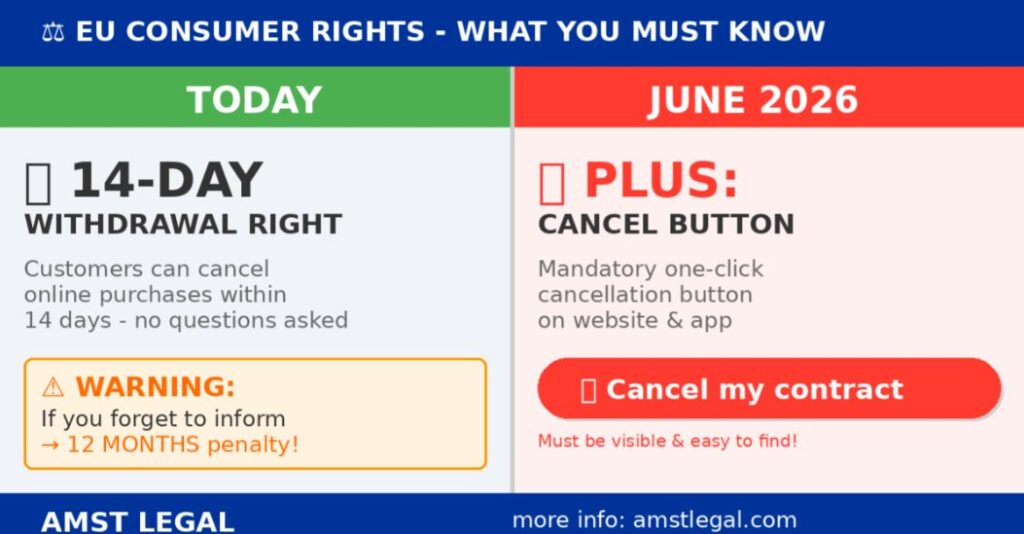
When businesses omit clear 14-day right of withdrawal information, the consequences escalate quickly. For example, the withdrawal period can extend by up to 12 months if you fail to inform consumers properly. Additionally, customers who struggle to cancel or cannot find the information will escalate to support, chargebacks, or regulators. As a result, your customer acquisition costs rise while margins erode through avoidable disputes and refunds. Therefore, clarity up front is more efficient than damage control later.
Opportunities if you handle it well
When you design the withdrawal experience thoughtfully, you create a measurable commercial advantage. Consequently, your brand earns trust, your sales cycle tightens and your legal exposure shrinks. In addition, product and CX teams benefit from fewer support tickets, while finance gets more predictable refund flows. Moreover, a clear process provides structured feedback on why customers withdraw, which helps improve pricing, positioning, and onboarding.

EU Consumer Law – Right of Withdrawal
How does this fits into the broader contract or business framework
Define the key documents and touchpoints
To operationalize the EU right of withdrawal, think about alignment of the following layers:
(1) Terms & Conditions or Service Agreement for consumers,
(2) order confirmation and onboarding emails,
(3) website/app flows including account pages, and
(4) support playbooks for frontline teams.
Furthermore, ensure your privacy and data-deletion steps match the offboarding process where relevant. In each layer, there should be a reference to the withdrawal right, explaining the period and point to the cancellation route.
Explain the connections
Your terms set the legal basis; your emails and pages make it actionable. Therefore, the contract should define the 14-day cooling-off period, the start date trigger (delivery of goods or conclusion of the service contract), the method for withdrawal, and any consequences (e.g., return shipping for goods, pro-rata charges for services started at the customer’s request). Meanwhile, your website and emails should offer direct links to the withdrawal instructions and—by June 2026—a clear “Cancel my contract” button for consumer contracts.
Keep flexibility while reducing risk
You can reduce churn risk while staying compliant by providing better pre-purchase information and post-purchase onboarding. For instance, set realistic product descriptions and trial guidance so customers know what to expect; that lowers withdrawal rates without restricting rights. In addition, use confirmations and reminders to clarify the start date and steps to cancel, which reduces misunderstandings. Finally, integrate a simple returns or service offboarding guide that explains timelines and what customers must do.
Practical examples and use cases
SaaS or tech deals (consumer context)
Imagine a B2C productivity app with monthly subscriptions. The consumer can exercise the right of withdrawal within 14 days from the conclusion of the service contract. If the customer expressly asks for immediate access during that period, you may charge for the portion of service already provided. However, you must have captured explicit consent and an acknowledgment that the 14-day right to cancel would be affected. Therefore, your signup flow should include a clear consent checkbox and a link to the withdrawal information.
Procurement or sales (hardware shipped to consumers)
Consider a retailer shipping smart devices to EU consumers. The 14-day right of withdrawal usually starts on delivery of the goods. Consequently, your confirmation email should display the delivery date and a direct route to initiate withdrawal. In addition, your returns page should specify the address, method of return, and refund timeline once the goods are received back in good condition. Because clarity here prevents disputes, your support team should use standard templates referencing the right and return steps.
Founders, CFOs, and entrepreneurs (pricing and refunds)
For early-stage founders selling direct-to-consumer, refunds can disrupt cash flow. Nevertheless, resisting the rule invites regulator attention and reputational damage. Instead, design a structured refund policy aligned with the cooling-off period, establish internal SLAs for refund execution, and publish the average refund timeline. Consequently, finance can forecast outflows, while leadership keeps regulators and payment providers comfortable with the company’s controls.
Where the right comes from what changes by June 2026
The EU Consumer Rights Directive (2011/83/EU) (link) sets the baseline for the EU right of withdrawal across distance and off-premises contracts. It defines the 14-day cooling-off period, outlines information duties for traders, and lists key exceptions. Moreover, it establishes the standard withdrawal form and clarifies the start dates for goods and services.
What changes by June 2026?
From June 2026, an additional requirement will apply under Directive (EU) 2023/2673, which amends the Consumer Rights Directive. It is important to realize that obligations tighten further.
Consumer-facing websites and apps will be required to present a clear “Cancel my contract” function and to inform consumers more clearly about withdrawal rights in their digital journeys. While the new requirement appears in rules that focus primarily on financial services, it signals a broader push for transparent, user-friendly cancellation in consumer contracts. Therefore, product and legal teams should treat 2025 as the build year: audit terms, update email templates, change the User Interface and improve the User Experience and the supporting content.
Where to add the right of withdrawal in your materials (and why)
Contracts and legal terms
Place a Right of Withdrawal clause in your consumer Terms & Conditions or Service Agreement. In that clause, state the 14-day period, define the trigger (delivery of goods or conclusion of services), reference the standard withdrawal form or provide an online form, and explain the process and timeline for refunds. Additionally, specify the customer’s obligations on goods (e.g., keep items in reasonable condition, return within a set timeframe) and any pro-rata charges for services if the consumer asked to start service during the cooling-off period.
Website and app flows
Add a dedicated Withdrawal & Cancellation page in your help or account area that:
- (1) explains the right of withdrawal in plain language,
- (2) links the process to the specific purchase,
- (3) offers the standard form or online equivalent, and
- (4) outlines refund timing.
Consequently, consumers can self-serve, which reduces support volume. By June 2026, implement a visible “Cancel my contract” button for consumer contracts and link it to confirmation and status pages that show progress and refund expectations. Remains to be decided how clear this ‘button’ or link will need to be.
Emails and communications
Include a short right of withdrawal notice in the order confirmation or service activation email. Because that message helps repeat the 14-day timeframe, provide a direct link to cancel, and attach or link to the standard withdrawal form. In addition, remind the customer of any return requirements for goods and clarify whether service has started at their request.
Exceptions you should know (short overview)
Although the EU right of withdrawal is broad, there are several important exceptions. These include (non-exhaustive list – conditions apply):
- Certain real estate, construction, social services, healthcare, gambling, and package travel contracts
- Custom-made or personalised goods
- Perishable products that can deteriorate quickly
- Sealed items unsealed after delivery for health or hygiene reasons
- Goods inseparably mixed with others after delivery
- Unsealed software, audio, or video recordings
- Digital content supplied online (not on a tangible medium) once performance has begun with the consumer’s express consent and acknowledgment of losing the withdrawal right
- Public auctions and regular household deliveries (e.g. groceries)
- Newspapers and magazines, except for subscriptions
- Services tied to a specific date, such as accommodation, transport, car rental, catering, or leisure activities
Benefits of doing this well
Business impact: speed, clarity, efficiency
When your 14-day right to cancel experience is clear, your sales funnels run smoother. Consequently, customers buy with confidence, support works from standard playbooks, and leadership sees fewer escalations. Additionally, transparent cancellation keeps payment processors comfortable, which can reduce chargeback risk and processing headaches. As a result, you gain speed and predictability without sacrificing compliance.
Legal impact: fewer disputes, cleaner scaling
Clear rights and processes lower ambiguity, which lowers disputes. Moreover, documenting consent for immediate service start and providing a robust cancellation route help you defend decisions if challenged. Because the EU right of withdrawal is standardized across the EU, a well-designed approach scales into new markets with fewer local adjustments.
Key takeaways
- The EU right of withdrawal grants consumers a 14-day cooling-off period for many distance and off-premises contracts.
- If you fail to inform consumers clearly, the withdrawal window can extend significantly, increasing risk and cost.
- By June 2026, consumer-facing sites must include a clear “Cancel my contract” function and clearer withdrawal information.
- Place the right in your terms, emails, and UX, and ensure support follows a standard offboarding playbook.
- Map exceptions to your offering and draft specific, plain-language guidance to prevent misunderstandings.
Conclusion & call to action
The EU right of withdrawal is not simply a legal obligation. It is a real risk for companies if not done right. Next to the way consumers order online, this is one of the areas where we see lots of court cases in the Netherlands. It is an essential part of how modern consumer businesses earn trust and reduce friction. Because the rules tighten in June 2026, now is the moment to update terms, start discussing how to build the “Cancel my contract” function, and standardize communications. If you want a practical review of your flows – commercial and legal – we can help you align contract language, UI vs UX design, and support so compliance becomes a smoother part of the customer experience.
Go here to book a consultation or discuss an interim engagement.
Background
Author: Robby Reggers, Founder of AMST Legal (amstlegal.com), recognized by Legal Geek as a LinkedIn Top Voice for contracting, negotiation, and interim GC work.
How we work: AMST Legal supports clients per contract/project or on an interim basis (set hours per week as GC/Legal Counsel).